
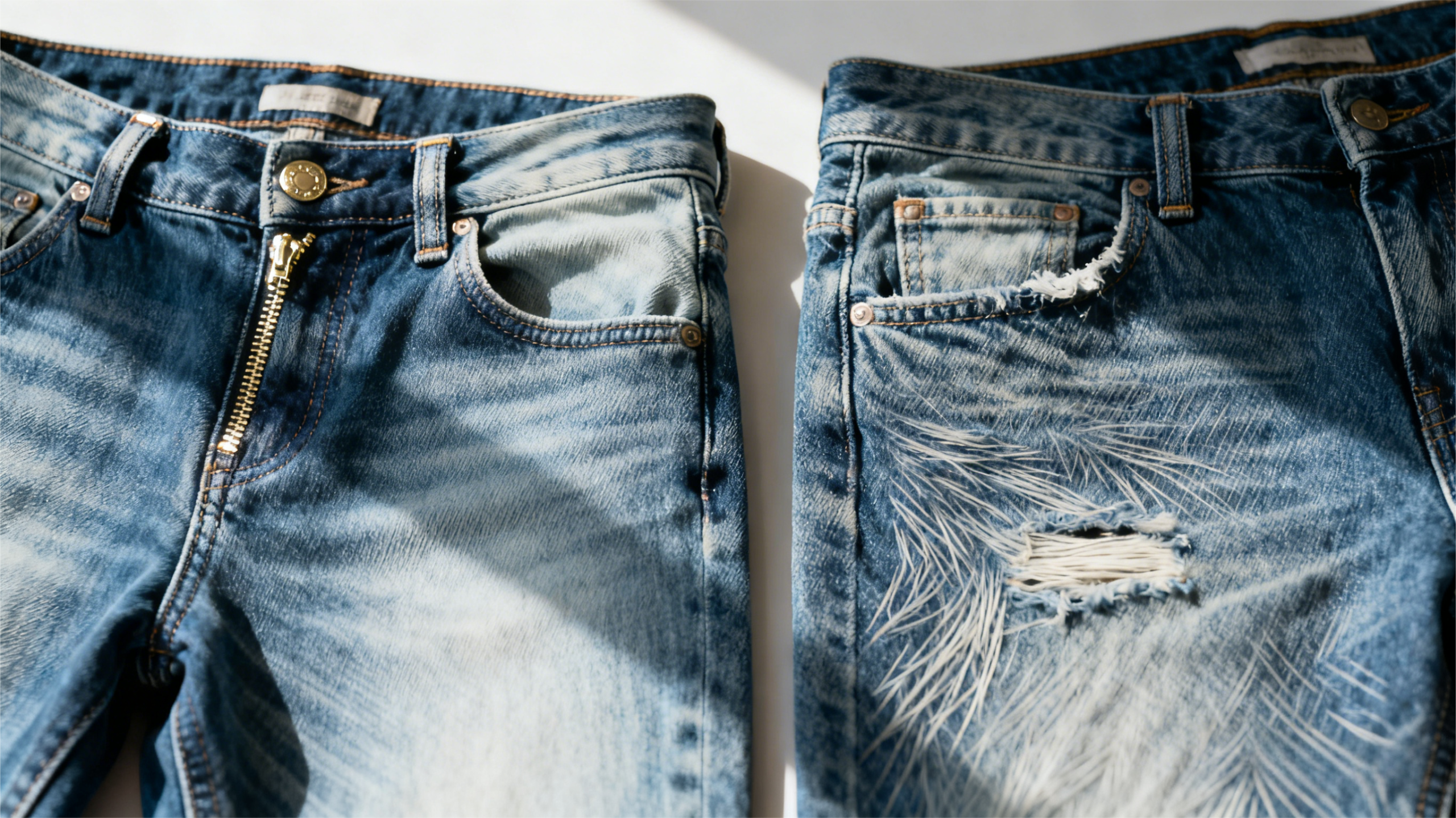
You will notice a key difference between Laser Wash Denim Techniques and traditional jeans washing: Laser Wash Denim Techniques use advanced technology, while traditional processes rely on water and chemicals. Laser Wash Denim Techniques shape the look and feel of your jeans, but they also have a significant impact on the environment and your wallet. Many brands now use Laser Wash Denim Techniques and other waterless, alternative softening methods to reduce water and chemical usage.
63% of denim finishing processes now have low environmental impact, thanks in part to Laser Wash Denim Techniques.
Sustainable practices, such as Laser Wash Denim Techniques, often lead to long-term savings.
Source | Key Insight |
|---|---|
Denim Jeans Market – Global Forecast 2025-2032 | Consumers are increasingly prioritizing brands that utilize water-efficient and recycled materials, indicating a regional trend towards sustainable practices like Laser Wash Denim Techniques. |
Denim Market Size, Share & Growth Report 2033 | Eco-friendly denim, including those made with Laser Wash Denim Techniques, is preferred by environmentally conscious consumers, influenced by fashion trends and marketing, suggesting regional variations in consumer behavior. |
United States Denim Market Size, Outlook, Trend | The U.S. market shows a significant rise in demand for eco-friendly products, with traditional producers adapting to these preferences by adopting Laser Wash Denim Techniques, reflecting regional consumer shifts. |
As you explore denim wash options, consider what matters most to you: eco-friendliness, cost, or design—and how Laser Wash Denim Techniques can help you achieve your goals.
Key Takeaways
Laser wash techniques use less water and energy, making them a more sustainable choice for denim production.
Choosing jeans made with laser wash can lead to long-term savings on water, chemicals, and energy costs.
Different denim washes create unique styles; laser wash offers precise designs without damaging the fabric.
Support eco-friendly practices by selecting brands that utilize laser wash technology for a lower environmental impact.
Understanding the differences between wash methods helps you make informed choices that align with your values and style.
Why Denim Wash Matters
Impact on Jeans Style
You might notice that denim washing shapes the look and feel of your jeans. The process does more than just soften the fabric. It creates unique patterns, colors, and textures that set your jeans apart. When you choose jeans, you often look for a certain style or finish. Different types of denim washes can help you find the perfect match for your taste.
Effects on Appearance and Style | Best For | |
|---|---|---|
Bleach Wash | Produces pale, sun-bleached looks; softens fabric; risks yellowing or damage if overdone. | Summer denim, white denim styles, pastel colors. |
Rinse Wash | Maintains dark indigo tone; slightly softens fabric; reduces shrinkage tension. | Workwear denim, dark denim lovers, entry-level washes. |
Sandblasting | Controlled wear patterns like whiskers and thigh fading. | High-end brands needing consistency in fading. |
Ozone Wash | Vintage-like fading; low water and energy use; preserves fabric strength. | Eco-conscious denim lines aiming for minimal impact. |
Stone and Acid Wash | Weaken fiber through abrasion and chemical stress. | Avoid for jeans expected to endure repeated wear. |
Enzyme Wash | Maintains better integrity of fabric. | Suitable for durable jeans. |
Laser Washing | Avoids mechanical stress entirely; achieves precise fading. | High visual accuracy in fading. |
You can see how different types of denim washes affect the final look. Some methods create bold fades, while others keep the color deep and rich. Your choice of wash can make your jeans stand out or give them a classic look.
Sustainability in Denim Washing
Sustainability has become a key concern in the denim industry. When you think about how your jeans are made, you should consider the impact on the planet. Many denim washing processes use large amounts of water and natural resources. Some even burn wood for fuel. The wastewater from these processes often contains harmful chemicals that flow into rivers and harm the environment.
Denim washing processes consume significant natural resources, including water and wood.
Wastewater from denim washing often contains pollutants that can damage local ecosystems.
You can help support sustainability by choosing jeans made with eco-friendly washing methods. Some newer techniques, like laser washing and ozone wash, use less water and energy. These methods help reduce the environmental footprint of your jeans. For example, the dry spirit technique has an environmental footprint of less than 22%, while traditional methods like whale blue reach 100%.
When you pick jeans, you make a choice that affects both style and sustainability. By understanding the different types of denim washes, you can find jeans that look great and support a healthier planet.
Traditional Jeans Wash Methods

Different Types of Denim Washes
When you look at jeans in a store, you see many finishes. These come from different traditional jeans wash methods. You often find these types:
Stone wash: Uses pumice stones to give jeans a faded, soft look. This method softens the fabric but creates waste.
Acid wash: Involves stones soaked in chlorine. This process gives jeans a mottled, high-contrast appearance. It became popular in the 1980s.
Bleach wash: Uses bleaching agents to lighten jeans. This method can make the fabric weaker.
Rinse wash: The simplest traditional jeans wash. It uses water to clean jeans and keep the original color.
Each traditional jeans wash method changes the look and feel of denim. You can choose jeans with a soft, worn-in style or a sharp, bold pattern.
Process Overview
You might wonder how traditional jeans wash methods work. The process starts with sorting denim garments by wash type. Workers remove sizing materials using enzymes. For stone washing, they tumble jeans with pumice stones. Enzyme washing uses cellulase for a faded look and soft finish. Sometimes, they bleach jeans for a lighter shade. Tinting or overdyeing adds color. Softeners make jeans comfortable. After washing, machines remove extra water. Workers dry the jeans and check quality before packing.
Step | Description |
|---|---|
Garment Receiving & Sorting | Sort jeans by wash type. |
Desizing | Remove sizing with enzymes. |
Stone Washing | Tumble jeans with stones for a rugged look. |
Enzyme Washing | Use enzymes for a soft, faded finish. |
Bleaching (Optional) | Lighten jeans with chemicals. |
Tinting / Overdyeing (Optional) | Add color tones. |
Softening | Make jeans comfortable. |
Hydro Extraction | Remove water with machines. |
Drying | Dry jeans at high temperatures. |
Finishing, Quality Check & Packing | Final check and packing. |
Results and Applications
Traditional jeans wash methods give you many choices in style and comfort. Stone wash creates a soft feel and faded look. Acid wash gives jeans a bold, high-contrast pattern. Bleach wash makes jeans light blue but can harm the fabric. Enzyme wash keeps jeans smooth and clean. Some methods, like sandblasting, create a rugged look but can be harmful to workers and the environment.
Wash Method | Effect | Environmental Impact |
|---|---|---|
Bleach Wash | Faded, cloudy, light-blue tone. | High – can harm water systems. |
Whiskering | Natural worn look. | Low – laser is eco-friendly. |
Sandblasting | Distressed, rugged appearance. | Very high – health hazards. |
Vintage Wash | Classic worn jeans look. | Moderate – depends on chemicals. |
Acid Wash | Irregular light-dark contrast. | High – harms environment. |
Raw Denim | Deep indigo color, stiff texture. | Very low – no chemicals used. |
Snow Wash | White, snowy patches. | High – damages fabric. |
Stone Wash | Soft hand feel, faded surface. | Medium – stone disposal waste. |
Enzyme Wash | Smooth, clean finish. | Low – biodegradable and eco-friendly. |
Tip: When you pick jeans, think about the traditional jeans wash method. Each process affects the style, comfort, and impact on the environment.
Laser Wash Denim Techniques
How Laser Wash Works
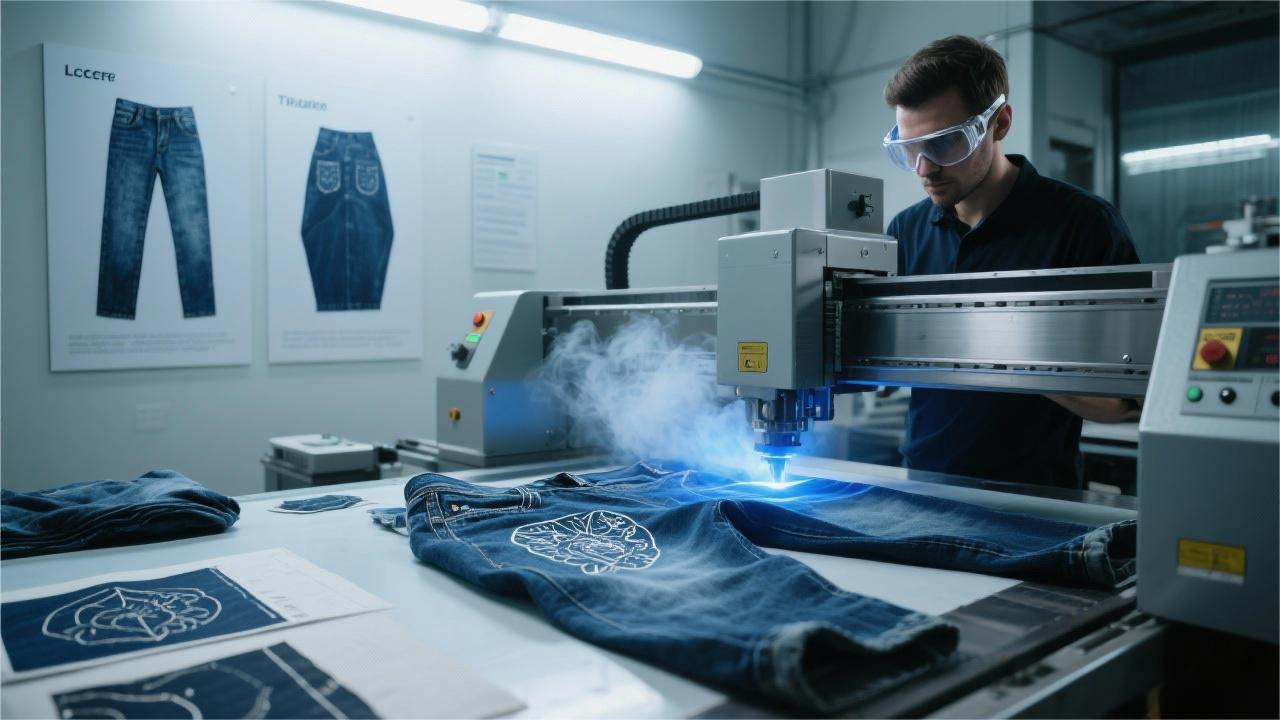
You see a big change in the way modern jeans wash happens with laser wash denim techniques. This technology uses focused beams of light to create patterns, fades, and textures on denim. The laser burns away the indigo dye on the surface, which forms whiskers, vintage effects, and even detailed artwork. You do not need water, stones, or harsh chemicals for this process. Instead, the technology relies on computer-controlled systems that guide the laser with high precision. You can program the machine to create the same effect on every pair of jeans, or you can customize each one for a unique look.
Laser wash technology stands out because it can mimic traditional finishes like potassium permanganate, but it does so with much less pollution. You avoid the dust and chemical exposure that come with sandblasting or acid washing. The process also works well for both raw denim and distressed denim styles. You can achieve rips, patches, and even intentional holes with this technique. This level of customization is hard to match with older methods.
Laser washing is a modern, sustainable technique where lasers burn off the indigo dye, creating fading and whiskering effects, offering precision without using water or stones.
Efficiency and Sustainability
Laser wash denim techniques offer major improvements in efficiency and sustainability. You use much less water and energy compared to traditional methods. For example:
Traditional denim washing processes use about 70 liters of water per pair of jeans. Laser technology reduces water usage by up to 67%.
Laser technology consumes 62% less energy than conventional denim finishing processes.
Innovative technologies like nano-bubble and ozone treatments can reduce water consumption by up to 90%.
Laser and enzyme-based washing methods also contribute to significant water savings.
You can see the measurable efficiency gains in the table below:
Efficiency Gain | Description |
|---|---|
Water Conservation | Laser washing techniques can reduce water consumption significantly, crucial in water-scarce regions. |
Energy Efficiency | These techniques are more energy-efficient, lowering the overall carbon footprint. |
Cost Savings | Long-term savings on chemicals, water, energy, and waste management costs. |
Laser finishing uses automated, programmable systems to etch patterns and create abrasion marks on denim. This method is highly precise and eliminates the need for water and chemicals, making it suitable for mass customization. You help reduce pollution and protect the environment when you choose jeans made with this technology.
You also support long-term sustainability outcomes:
Improved worker safety
Potential for cost savings
Laser wash technology helps you lower pollution and improve the safety of workers. You also see cost savings over time, since you spend less on water, chemicals, and waste management.
Design and Results
Laser wash denim techniques give you unmatched design flexibility. You can create vintage looks, whiskers, patches, and even intentional holes in denim. The technology allows you to burn patterns directly onto the fabric, which means you can achieve detailed designs like rips and distressed artwork. This method works well for both raw denim and distressed denim styles.
You get precise and repeatable results with laser wash. The technology lets you customize each pair of jeans, so you can offer mass customization or one-of-a-kind pieces. You can also mimic traditional chemical processes while using much less water and fewer chemicals. This makes laser wash a cleaner and more eco-friendly choice.
Laser wash technology offers you the ability to create intricate designs that are hard to achieve with conventional methods. While the initial investment in this technology may be higher, the accuracy and eco-friendliness make it a superior choice for modern jeans wash. You can produce raw denim with subtle fades or distressed denim with bold, artistic effects. The results are consistent, and you avoid the pollution that comes from older techniques.
Tip: If you want jeans with unique designs, high quality, and a lower environmental impact, look for brands that use laser wash denim techniques.
Laser Wash vs Traditional Jeans Wash
Environmental Impact
You play a big role in shaping the environmental impact of the denim industry when you choose between laser wash and traditional jeans wash types. Traditional denim washing uses thousands of liters of water for each pair of jeans. This process also creates pumice waste and releases chemicals into the environment. Laser wash changes the game. You use much less water and avoid pumice stones altogether. Ozone and e-flow technologies can cut chemical use by up to 60%. New methods like waterless dyeing and recycled cotton yarns help transform the denim lifecycle.
Many countries now enforce strict environmental regulations for jeans wash types. The EIM Score helps brands meet standards like ZDHC and OEKO-TEX certification. Laser wash makes it easier for you to comply with these rules.
You can see the difference in environmental impact in the table below:
Parameter | Laser Wash | Traditional Wash |
|---|---|---|
Water Consumption | Low | High |
Energy Consumption | Low | High |
Chemical Impact | Low | High |
Worker Health & Safety | Improved | Riskier |
Laser wash stands out as a more sustainable method. You help reduce water and chemical usage, which lowers the overall environmental impact of your jeans.
Cost and Production Speed
You might wonder how the cost and speed of laser wash compare to traditional jeans wash types. Laser wash requires an initial investment in technology, but you save money over time. You spend less on water, chemicals, and waste management. Production becomes faster because you automate many steps. You also reduce the need for manual labor.
Here is a quick look at the cost difference:
Finishing Type | |
|---|---|
Laser Distressing | +$0.80–$1.20 |
Traditional Methods | Varies (not specified) |
Laser wash can seem more expensive at first. Over time, you benefit from lower operating costs and faster production. You can produce more jeans in less time, which helps you meet market demand.
Design Flexibility
You get more creative freedom with laser wash than with traditional jeans wash types. Laser wash lets you create detailed patterns, vintage effects, and even artwork on denim. You can program the machine for each pair of jeans, so you achieve consistent results or unique designs. Traditional methods often damage the fabric and limit your options.
The table below shows how laser wash compares to traditional washing for design flexibility:
Aspect | Traditional Washing Issues | |
|---|---|---|
Fabric Damage | Minimal to none | Commonly damages fabric |
Tensile Strength | Maintains or enhances | Often reduces tensile strength |
Vintage Effects | Achieves desired effects without damage | Limited in achieving vintage looks |
Environmental Impact | More sustainable, less waste | Higher waste and environmental concerns |
Laser wash gives you the power to create jeans that stand out. You can offer customers more choices and higher quality designs.
Garment Quality
You want your jeans to last and look good. Laser wash helps you achieve both. This method avoids harsh chemicals and mechanical abrasion, so your denim keeps its strength and shape. You get precise fading and whiskering without weakening the fabric. Traditional jeans wash types can cause fiber damage, reduce tensile strength, and shorten the life of your jeans.
Laser wash also improves worker safety. You avoid dust and chemical exposure, which makes the production environment safer. Your jeans look better and last longer when you choose this method.
Tip: If you want high-quality denim with unique designs and a lower environmental impact, look for jeans made with laser wash.
Pros and Cons Comparison
When you compare laser wash and traditional wash methods, you see clear differences in how each process affects your jeans. Each method offers unique benefits and drawbacks. You should know these before you choose your next pair.
Tip: Understanding the pros and cons helps you make smarter choices for style, sustainability, and quality.
Quick Reference Table
Here is a quick table to help you see the main advantages and disadvantages of each wash method:
Feature | Laser Wash | Traditional Wash |
|---|---|---|
Water Usage | Very low | Very high |
Chemical Use | Minimal | Heavy |
Design Flexibility | High (custom patterns, artwork) | Moderate (limited by technique) |
Production Speed | Fast (automated, repeatable) | Slower (manual steps) |
Cost Over Time | Saves money long-term | Higher ongoing costs |
Initial Investment | Expensive equipment | Lower upfront cost |
Worker Safety | Safer (less exposure) | Riskier (dust, chemicals) |
Maintains denim strength | Can weaken fabric | |
Environmental Impact | Eco-friendly | Polluting |
Style Options | Precise fades, unique effects | Classic looks, vintage styles |
Pros of Laser Wash:
You use less water and fewer chemicals.
You get precise designs and consistent results.
You help protect the environment and workers.
Cons of Laser Wash:
You need expensive equipment.
You may pay more upfront.
Pros of Traditional Wash:
You get classic denim styles.
You pay less for equipment.
Cons of Traditional Wash:
You use more water and chemicals.
You risk damaging the fabric and harming the environment.
When you choose a wash method, think about what matters most to you. You might want eco-friendly jeans, unique designs, or classic denim looks. The right wash method helps you match your style and values.
Choosing the Right Denim Wash
Factors to Consider
When you decide which wash method suits your needs, you should look at several important factors. Each method affects the environment, your health, and the final look of your jeans. You want to make a smart choice that matches your values and style.
Here is a table that shows how laser wash and traditional wash methods compare:
Washing Method | Environmental Impact | Health Hazards | Time Efficiency | Aesthetic Effect |
|---|---|---|---|---|
Laser Wash | Low | None | High | Natural worn effect |
Traditional Wash | Moderate to Very High | High | Moderate | Varies based on chemicals |
Laser wash stands out for its low environmental impact and high time efficiency. You avoid health hazards like silicosis, which can occur with traditional wash methods. The aesthetic effect of laser wash gives you a natural worn look, while traditional wash can vary depending on the chemicals used.
Tip: If you care about worker safety and the environment, you should consider laser wash. This method does not expose you or workers to harmful dust or chemicals.
You also want to think about how quickly you need your denim finished. Laser wash offers high time efficiency, so you get your jeans faster. Traditional wash methods take more time and often use more resources.
You can see clear differences between laser wash and traditional denim washing. Laser wash uses less water, energy, and chemicals. The table below shows how much you save with laser wash:
Metric | Laser Wash | Traditional Washing | Improvement (%) |
|---|---|---|---|
Water Use (L/m) | 0 | 100–120 | −100% |
Energy (kWh/m) | 0.5–1.0 | 5.5–6.0 | −50–75% |
Chemical Use (g/m) | 0 | 50–100 | −100% |
Process Time (min/m) | 2–3 | 60–90 | −95% |
Laser wash stands out as the most sustainable and efficient choice. If you want eco-friendly jeans with precise designs, choose laser wash. For a classic vintage look, stone or acid wash may suit your style. Use the table below to help you decide:
Wash Technique | Sustainability | Aesthetic Effect |
|---|---|---|
Laser Wash | Sustainable, accurate | Specific faded areas |
Stone Wash | Varies | Worn, faded appearance |
Acid Wash | Higher impact | Sharp contrast, vintage |
Tip: Pick laser wash for sustainability and modern style. Choose traditional washes for classic looks.
FAQ
What makes laser wash denim more eco-friendly than traditional methods?
You support sustainable production when you choose laser wash denim. This method uses less water and fewer chemicals. You help reduce pollution and conserve resources, making a positive impact on the environment.
Can laser wash techniques create classic denim styles?
You can achieve classic denim styles with laser wash technology. The process allows you to mimic vintage fades, whiskers, and distressed effects. You get precise results without damaging the fabric.
Does the jeans wash process affect garment durability?
You protect the strength of your jeans when you select laser wash. The jeans wash process avoids harsh chemicals and abrasion. Your denim lasts longer and maintains its shape.
How does the washing process impact worker safety?
You improve worker safety by choosing laser wash. The washing process eliminates dust and chemical exposure. You help create a safer workplace for everyone involved in denim production.
Are laser wash jeans more expensive than traditional washed jeans?
You may pay more upfront for laser wash jeans. Over time, you save money because the process uses fewer resources and reduces waste. You benefit from lower long-term costs.