
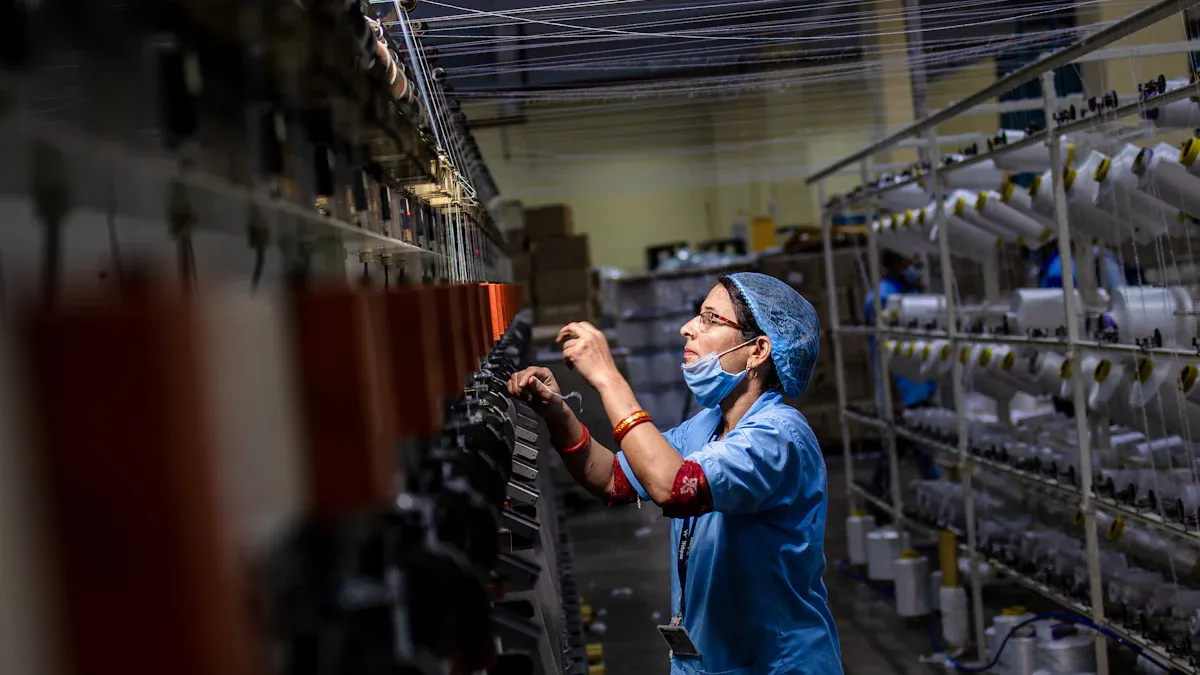
AI in Fabric Inspection transforms denim manufacturing. You see faster inspections and greater accuracy. Quality control efficiency rises by 30%, and manufacturing productivity grows by 12%. Garment defects drop by 20%, while detection accuracy reaches a 95% success rate.
Metric | Improvement |
|---|---|
Quality control efficiency | |
Manufacturing garment defects | 20% decrease |
Detection accuracy | 95% success rate |
Product defects | 15-20% decrease |
Manufacturing productivity | 12% increase |
You benefit from reduced inspection time—up to 70% faster. Factories report 35% fewer defects and a 15% cut in raw material waste. Adopting AI-powered systems gives you a competitive edge in both quality and efficiency.
Key Takeaways
AI technology speeds up fabric inspections by up to 70%, allowing for faster production and timely deliveries.
Automated systems improve defect detection accuracy to 95%, reducing the number of defective garments reaching customers.
Implementing AI can lead to a 30% increase in quality control efficiency, enhancing overall product quality.
AI reduces material waste by up to 15%, contributing to cost savings and a more sustainable production process.
Integrating AI into existing workflows is feasible and can enhance quality control without major disruptions.
Challenges in Traditional Denim Inspection
Manual Inspection Limitations
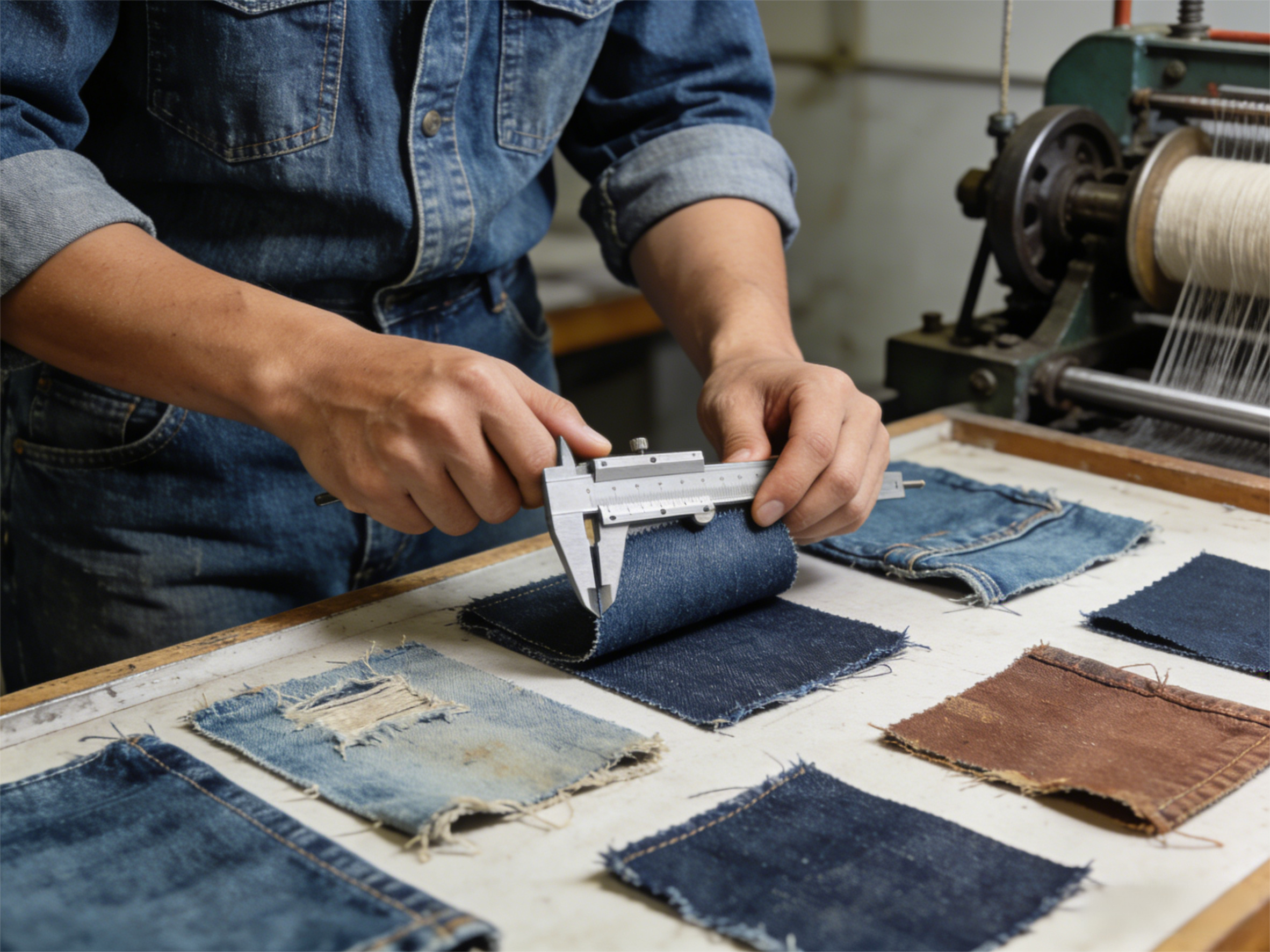
You rely on skilled workers to spot defects in denim fabric. Manual inspection seems effective at first, but it has clear limits. When you start a shift, your accuracy may reach 80–90%. After 20–30 minutes, your focus drops. Accuracy can fall to 50–70%. If you inspect for hours, you miss even more subtle defects. Fatigue and subjective judgment make it hard to keep up with the same level of attention.
Human inspectors miss about 15% of defects on average.
Error rates rise as you get tired or distracted.
Subtle flaws often go unnoticed after long periods.
Manual inspection depends on your experience and mood. You might see a defect one day and miss it the next. This inconsistency leads to uneven quality. While manual checks help with final audits, they cannot guarantee the same results every time. AI-based systems do not suffer from fatigue or bias. They deliver steady and reliable results, even during long production runs.
Note: Relying only on manual inspection can compromise both safety and quality. You risk letting defective fabric reach the next stage of production.
Impact on Quality and Waste
Traditional inspection methods struggle to catch every type of defect. Denim fabric can show many issues, from dyeing problems to structural flaws. Here is a table showing common defects you might encounter:
Type of Defect | Description | Cause | Impact |
|---|---|---|---|
Streaky Dyeing | Uneven indigo absorption, lighter/darker lines | Inconsistent yarn tension during dyeing | Affects appearance consistency |
Color Variation | Shade difference between rolls or within a roll | Uneven dip times, chemical concentrations | Troublesome during garment assembly |
Patchy Dye Spots | Localized dark or light patches | Contamination in dye bath or poor scouring | Appears after wash, often irreparable |
Snags and Pulls | Yarn displacement causing loops or bubbles | Rough handling or loom damage | Weakens structure, impacts visual appeal |
Bowing and Skewing | Weft yarns not perpendicular to selvedge | Improper tension during weaving/finishing | Pattern alignment issues during cutting |
Oil Stains or Grease Marks | Dark, slippery stains | Machine oil contamination | Difficult to remove, leads to rejection |
Roll Length Inconsistency | Different roll lengths (e.g., 70m vs. 120m) | Production inconsistencies | Planning and cutting inefficiencies |
Tightly Rolled Edges | Tension lines, permanent creases | Handling or rolling errors | Creases may not be fixable |
Roll Identification Errors | Mismatched batches in production | Labeling mistakes | Quality tracking problems |
When you miss these defects, you face higher waste and more rework. Defective fabric leads to wasted raw materials and extra costs. You also risk sending flawed denim to customers, which can hurt your reputation. Traditional inspection methods make it hard to maintain high quality and low waste in a fast-paced production environment.
AI in Fabric Inspection: Technologies and Process
Computer Vision and Machine Learning
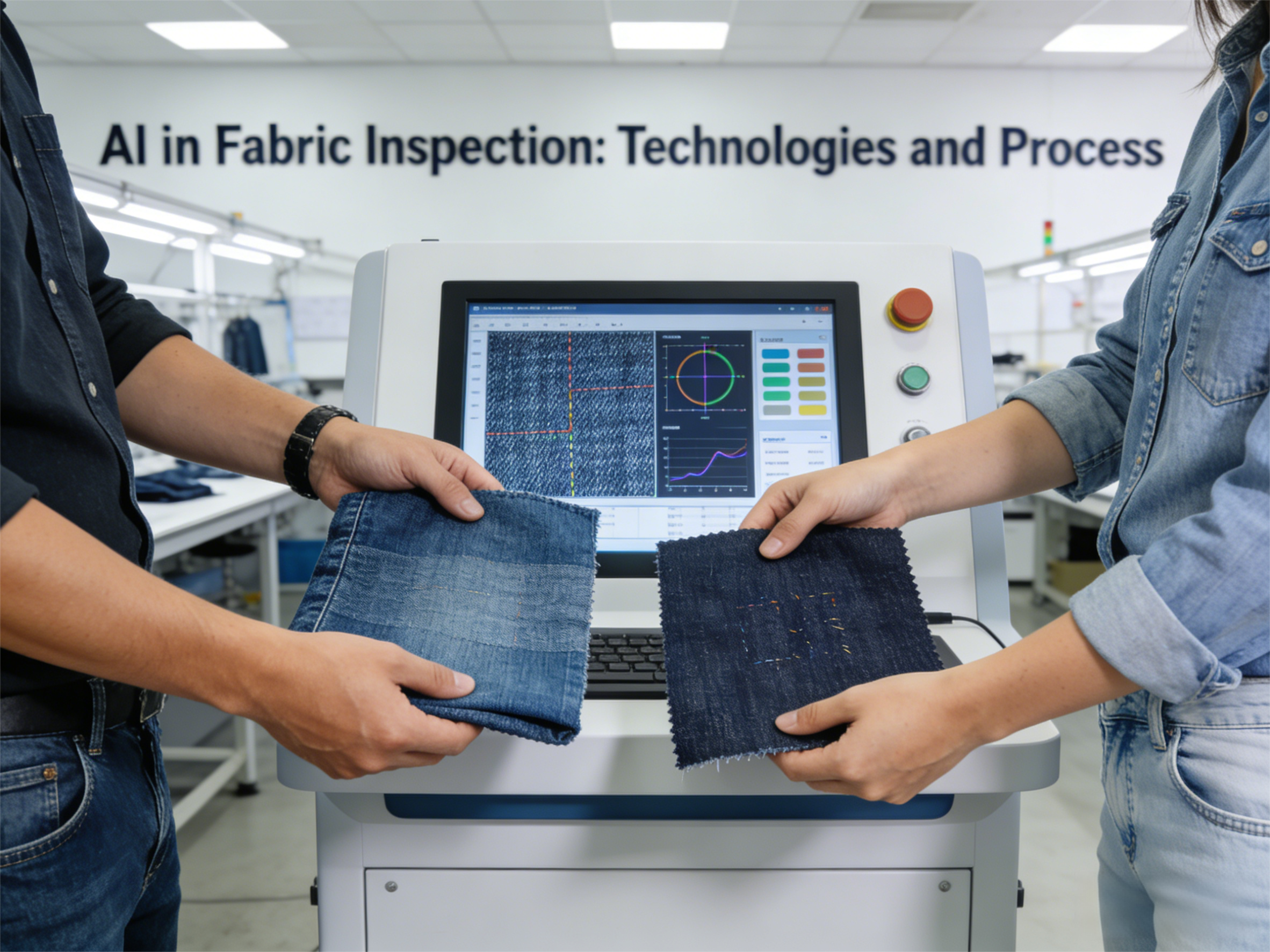
You see a major shift in denim manufacturing when you use computer vision and machine learning. These technologies help you spot defects that human eyes often miss. High-resolution cameras scan every inch of fabric, capturing images in real time. Machine learning algorithms, especially convolutional neural networks (CNNs), analyze these images and learn to recognize patterns linked to defects.
CNNs identify surface issues like pilling, snagging, and color fading.
The algorithms study thousands of fabric images, learning to predict which areas are most likely to show defects.
You benefit from models that spot flaws invisible to the naked eye.
A model such as ResNet-50 can reach 99.3% accuracy when classifying woven fabric types. This level of precision helps you evaluate yarn quality and maintain high standards.
You rely on these systems to deliver consistent results. The technology does not get tired or distracted. You can trust the inspection process to remain accurate throughout long production runs.
YOLOv8 and CNN Applications
You use advanced models like YOLOv8 and CNNs to detect and classify multiple types of denim defects. These models work quickly and handle large volumes of data. YOLOv8, for example, excels at segmenting cotton fibers and identifying impurities. CNNs provide rapid and reliable classification for a wide range of fabric flaws.
Model | Application | Performance Metrics |
|---|---|---|
YOLOv4 | Impurity detection in cotton | |
Cotton-Net | Rapid impurity content detection | Not specified |
YOLOv4-tiny | Detection of white and colored impurities | 98.78% and 98.00% accuracy |
YOLOv8 (Cotton-YOLO-Seg) | Segmentation of cotton fibers from impurities | Improved impurity rate detection |
You gain the ability to identify and sort defects by type, size, and severity. These models support multi-class defect identification, which means you can separate minor flaws from major ones. You can then decide whether to repair, recycle, or reject the fabric. This process helps you reduce waste and improve overall quality.
Automated Machines and Big Data Analytics
You see automated machines equipped with AI-powered cameras working on the production line. These machines scan garments for defects such as stains, tears, and loose threads before the items move to washing or packaging. You ensure only quality products reach the next stage.
AI-enabled camera systems on stitching lines detect weaving flaws and stitching defects in real time.
The systems learn to identify subtle defects, which improves detection accuracy and reduces the need for manual labor.
Automated adjustments happen instantly, keeping your production process efficient.
You also benefit from big data analytics. The system collects inspection data from every roll of denim. You analyze this data to spot trends, predict maintenance needs, and optimize production schedules. Predictive maintenance helps you avoid unplanned downtime and lower maintenance costs. You also contribute to environmental sustainability by reducing waste and energy use.
Description | |
|---|---|
Deep Learning | Utilizes adaptive AI models for real-time defect classification. |
Computer Vision | High-resolution imaging for accurate defect detection. |
Automation | Replaces manual inspection methods, enhancing speed and accuracy. |
Predictive Maintenance | Minimizes unplanned downtime and maintenance costs. |
Environmental Sustainability | Contributes to waste reduction and energy-efficient operations. |
Smart Factory Adoption | Supported by government incentives for higher AI integration in textile manufacturing. |
You compare AI-powered systems to traditional methods and see clear advantages:
Feature | AI-Powered Systems | Traditional Methods |
|---|---|---|
Defect Detection | Detects defects that humans can miss | Limited to human observation |
Inspection Resolution | Uses high-resolution cameras | Varies, often lower resolution |
Real-Time Detection | Yes, allows immediate corrective actions | No, often post-production checks |
Continuous Monitoring | Yes, maintains quality throughout production | Limited monitoring |
Automated Adjustments | Yes, adjusts settings automatically | Manual adjustments required |
You experience faster, more accurate, and more consistent inspections. AI in Fabric Inspection gives you the tools to maintain high quality, reduce waste, and stay competitive in the denim industry.
Benefits of AI for Denim Manufacturing
Faster and More Accurate Inspection
You see a dramatic change in inspection speed when you use AI in Fabric Inspection. Automated systems scan denim fabric much faster than manual methods. High-resolution cameras and smart algorithms check every inch of material in seconds. You no longer wait for slow, error-prone manual checks. Instead, you get instant feedback on defects and quality.
AI tools boost defect detection accuracy by up to 90%. You catch tiny flaws that human eyes often miss. This means fewer defective garments reach your customers. You also spend less time on rework and repairs. Your production line moves faster, and you deliver orders on time.
Tip: Faster inspections help you meet tight deadlines and keep your customers happy.
Consistency and Quality Improvement
You achieve consistent quality with AI in Fabric Inspection. Automated systems apply the same standards to every roll of denim. You avoid the risk of human error and fatigue. Each piece of fabric meets strict quality requirements, which builds trust with your buyers.
Here is how AI improves consistency and quality:
Aspect | Description |
|---|---|
Production Efficiency | AI and automation enable hyper-efficient production systems, reducing material waste and labor costs. |
Quality Control | AI-powered visual inspection tools detect defects with greater speed and accuracy than manual methods. |
Consistency in Production | Automated systems ensure each denim piece meets precise quality standards, enhancing overall consistency. |
You also benefit from smart fabric handling. Automated machines prevent damage during inspection and sorting. AI algorithms optimize cutting and sewing, so you get uniform results every time.
AI enhances precision and efficiency in garment production.
Automated fabric handling systems prevent damage to materials.
AI algorithms optimize fabric cutting and sewing for consistent results.
You notice fewer returns and complaints. Higher accuracy in defect detection protects your brand reputation. You support leaner production cycles and just-in-time inventory models, which keep your business agile.
Higher accuracy in defect detection minimizes returns.
Enhances brand reputation through improved quality.
Supports leaner production cycles and just-in-time inventory models.
Cost and Waste Reduction
You save money and reduce waste with AI in Fabric Inspection. Automated systems use less labor and cut down on material waste. You spend less on repairs and replacements. Your bottom line grows stronger as you improve efficiency.
AI implementation leads to substantial ROI through efficiency gains and cost reductions. You negotiate better deals with buyers because your quality is higher. You see AI as an investment, not just an expense. The initial cost pays off with long-term benefits.
AI tools enhance defect detection accuracy by 90%, leading to reduced waste.
Improved efficiency and cost savings contribute to a healthier bottom line.
Initial implementation costs are outweighed by long-term benefits such as increased efficiency and improved quality.
You keep your production sustainable. Less waste means you use fewer resources and lower your environmental impact. Your factory becomes more competitive in the global denim market.
Note: Investing in AI-powered inspection systems helps you achieve higher quality, lower costs, and a greener operation.
Real-World Impact and Implementation
Case Study: Reduced Inspection Time in Turkey
You can see the difference AI in Fabric Inspection makes when you look at denim factories in Turkey. A major exporter adopted an AI-based computer vision quality control system. The factory achieved a 50% reduction in inspection time. The system flagged fabric abrasions in seconds, which human inspectors had missed before. You now catch defects faster and improve your overall efficiency.
The AI system detects abrasions in seconds.
Inspection time drops by half.
Missed defects decrease, raising product quality.
Integration with Existing Workflows
You can integrate AI-powered inspection systems into your current production line without major disruptions. Start by automating quality checks with visual inspection tools. These systems spot defects early, so you avoid costly rework. Use AI forecasting tools to predict delays by analyzing past data and current orders. This helps you plan better and keep your workflow smooth.
Use forecasting tools to manage delays.
Enhance team communication with AI project management platforms.
AI enables closed-loop quality control. The system adjusts process settings based on inspection results. You maintain high product quality without constant human supervision. This supports your goal of zero-defect manufacturing.
Tip: Begin with a workflow assessment, collect defect images, train your AI models, and customize algorithms for your needs. Train your staff and monitor the system for continuous improvement.
Adoption Challenges and Solutions
You may face challenges when you switch to AI in Fabric Inspection. Handling heavy denim fabric takes more time and labor. The risk of defects and rework rises because denim is complex. You might struggle to keep quality consistent across different fabric types.
Obstacle | Description |
|---|---|
Handling denim needs more time and skilled labor, raising costs. | |
Higher Risk of Defects and Rework | Denim complexity leads to more defects and delays. |
Difficulty in Maintaining Consistent Quality | Denim variability complicates quality control. |
Challenges in Inspecting and Detecting Defects | Denim’s intricate nature makes defect detection tough. |
You can solve these problems with AI-driven automated fabric handling systems. These systems reduce labor and prevent damage. Use AI algorithms for optimal cutting and sewing to minimize waste. Machines powered by AI ensure precise stitching and consistent quality.
To transition from manual to AI-powered inspection, follow these steps:
Assess your current workflow and find integration points.
Collect images of defects and train your AI models.
Customize algorithms for your production line.
Train your operators to work with AI systems.
Monitor and improve the system using feedback.
Note: You can overcome most obstacles by combining automation, training, and continuous monitoring.
Future of AI in Denim Fabric Inspection
Advancements in Detection Frameworks
You will see rapid progress in how machines find and classify denim defects. New detection frameworks use both motif-based and deep-learning techniques. These hybrid models help you spot even the smallest flaws with greater accuracy. Real-time data analytics let you manage quality before problems grow. You can now use IoT-enabled inspection machines that monitor fabric remotely and predict when maintenance is needed. This means fewer breakdowns and smoother production.
Enhanced defect detection accuracy through advanced AI and machine learning.
Real-time analytics for proactive quality management.
IoT-enabled inspection machines for remote monitoring and predictive maintenance.
Hybrid models that combine motif-based and deep-learning methods for better results.
Companies like Inv Performance Materials LLC have created automated inspection tools for yarn packages. These tools reduce manual work and boost efficiency. FrontierCool Inc. helps you sort fabrics using images, which cuts down on waste. Shimmy Technologies Group Inc. improves how you move from design to manufacturing, making teamwork easier and saving important knowledge.
Tip: As these technologies grow, you will find it easier to keep quality high and costs low.
Long-Term Industry Transformation
AI in Fabric Inspection will change how you make and sell denim. You can use AI to study what customers want and predict new trends. This helps you design jeans that match market demand. Tools like Trendalytics show you what people are searching for, so you can plan your collections better.
You will also see smarter supply chains. AI lets you adjust production in real time, which reduces waste and keeps your factory running smoothly. Automated systems can customize textiles for each customer, making fashion more personal. AI-driven automation will help you schedule work, cut downtime, and keep your business flexible.
AI enhances design by analyzing consumer data and predicting trends.
Real-time supply chain adjustments reduce waste and improve efficiency.
Customization becomes easier, letting you meet individual customer needs.
Automation streamlines production and reduces downtime.
AI cloth inspection machines now use image recognition, data analysis, and automatic controls. High-precision cameras and deep learning algorithms ensure every roll of denim meets your standards, no matter who operates the machine. You can expect these systems to keep getting smarter, making your denim business stronger for years to come.
You see how AI in fabric inspection solves key challenges in denim manufacturing. AI-powered systems help you cut waste, save costs, and boost efficiency. The table below shows real benefits:
Description | Measurable Benefit | Source |
|---|---|---|
AI fabric-cutting reduces waste by up to 15% | Cost savings, higher throughput | |
AI demand forecasting streamlines inventory | Efficiency, sustainability | |
AI dyeing optimization cuts water use by 20% | Profitability, sustainability |
You can take these steps to get the most from AI:
Use automated inspection to keep quality high.
Catch defects early to reduce waste.
Invest in training for your team.
Make sure AI fits your current workflow.
Monitor systems for 24/7 production.
Stay updated on new AI tools. You will keep your denim business strong and ready for the future.
FAQ
How does AI detect denim fabric defects?
AI uses cameras to scan denim. Machine learning models analyze images and spot defects like stains, snags, or color issues. You get instant feedback and higher accuracy than manual inspection.
Can you integrate AI inspection with existing machines?
Yes. You can add AI-powered cameras and software to your current production line. Most systems work with standard equipment. You improve quality control without replacing all your machines.
What training do workers need for AI systems?
You train your team to use new software and monitor inspection results. Most AI systems have simple interfaces. Workers learn to review flagged defects and adjust settings as needed.
Does AI inspection reduce waste in denim manufacturing?
AI helps you catch defects early. You remove faulty fabric before it reaches the next stage. This process lowers material waste and saves money. You also improve sustainability.