
Have you ever wondered how denim jeans keep changing with new technology? Smart fabric utilization now lets you experience jeans that feel comfortable and look stylish. You see denim evolving with features that improve your daily life and help protect the environment. Many brands use smart fabric utilization to make denim more sustainable and add unique fashion elements. You care about fashion and want jeans that match your values. The table below shows how smart fabric utilization and sustainability shape your choices.
Evidence Type | Description |
|---|---|
Sustainability Impact | 60% of consumers consider sustainability in their purchasing decisions. |
Consumer Preferences | Increasing demand for eco-friendly materials and ethical production practices. |
Brand Loyalty | Sustainable practices enhance brand loyalty among consumers. |
Smart fabric utilization makes denim a symbol of modern fashion and responsibility.
Key Takeaways
Smart denim uses advanced fabrics for comfort and performance, including temperature regulation and moisture-wicking properties.
Sustainable practices in denim production reduce water usage and pollution, making eco-friendly choices more accessible.
Wearable technology in smart denim allows for health tracking and device control, enhancing functionality beyond traditional jeans.
Proper care of smart denim extends its lifespan and supports sustainability by reducing textile waste.
Investing in quality smart denim offers better durability and comfort, aligning with both personal values and environmental responsibility.
Smart Fabric Utilization Trends in Denim
Key Innovations in Smart Denim
You see denim changing as new fabric technologies appear in the market. Smart denim uses advanced fabric to give you more comfort and better performance. Many brands now use thermoregulating fabric that adjusts to your body temperature. You feel cool in summer and warm in winter. E-textiles and conductive fibers allow sensors to track your body metrics. You can monitor your health while wearing denim jeans. Project Jacquard, a partnership between Levi’s and Google, brings touch-sensitive fibers into denim. You control your devices by touching your jeans. These innovations make denim more interactive and functional.
Thermoregulating fabric keeps you comfortable in different weather.
E-textiles and conductive fibers add sensors for health tracking.
Touch-sensitive fabric lets you interact with your devices.
Stretch and recovery technology improves flexibility.
Wearable technology makes denim jeans multifunctional.
Traditional denim uses only cotton. You may notice stiffness and sagging after many washes. High-performance denim uses modern fabric for better strength and fit. Performance denim feels more breathable and dries quickly. You get jeans that work for everyday life and active use. Denim now acts as a platform for wearable technology. Conductive fibers create touch-sensitive pockets. RFID tags help with inventory management and add new features.
AI and Data in Denim Production
You benefit from smarter denim production because companies use artificial intelligence and data analytics. AI matches fabric properties with the best textile mills. You get jeans made from optimal fabric. Automated cost optimization helps brands offer better prices. Robotics and sensors prevent damage to delicate fabric during handling. AI algorithms improve cutting and sewing, reducing fabric waste. Zero-waste patterns help designers use fabric efficiently. Custom-fit jeans use AI for on-demand production, so you get jeans that fit perfectly and reduce excess inventory.
Feature | Description |
|---|---|
Analyzes fabric properties and matches with optimal textile mills. | |
Automated Cost Optimization | Ensures the best pricing for textile purchases. |
AI-Powered Fabric Handling | Uses robotics and sensors to protect delicate fabric. |
AI Algorithms for Cutting/Sewing | Minimizes fabric waste during production. |
Zero-Waste Patterns | Designs patterns that use fabric efficiently. |
Custom-Fit Jeans | Uses AI for on-demand production and better fit. |
Data analytics also play a big role. You see brands using AI and big data to learn about consumer preferences and market trends. This helps companies create denim jeans that match your needs and values. You get better quality, improved performance, and more choices. Smart denim and advanced fabric technology help protect the environment by reducing waste and improving efficiency.
How Smart Fabrics Work in Denim
Types of Smart Fabrics
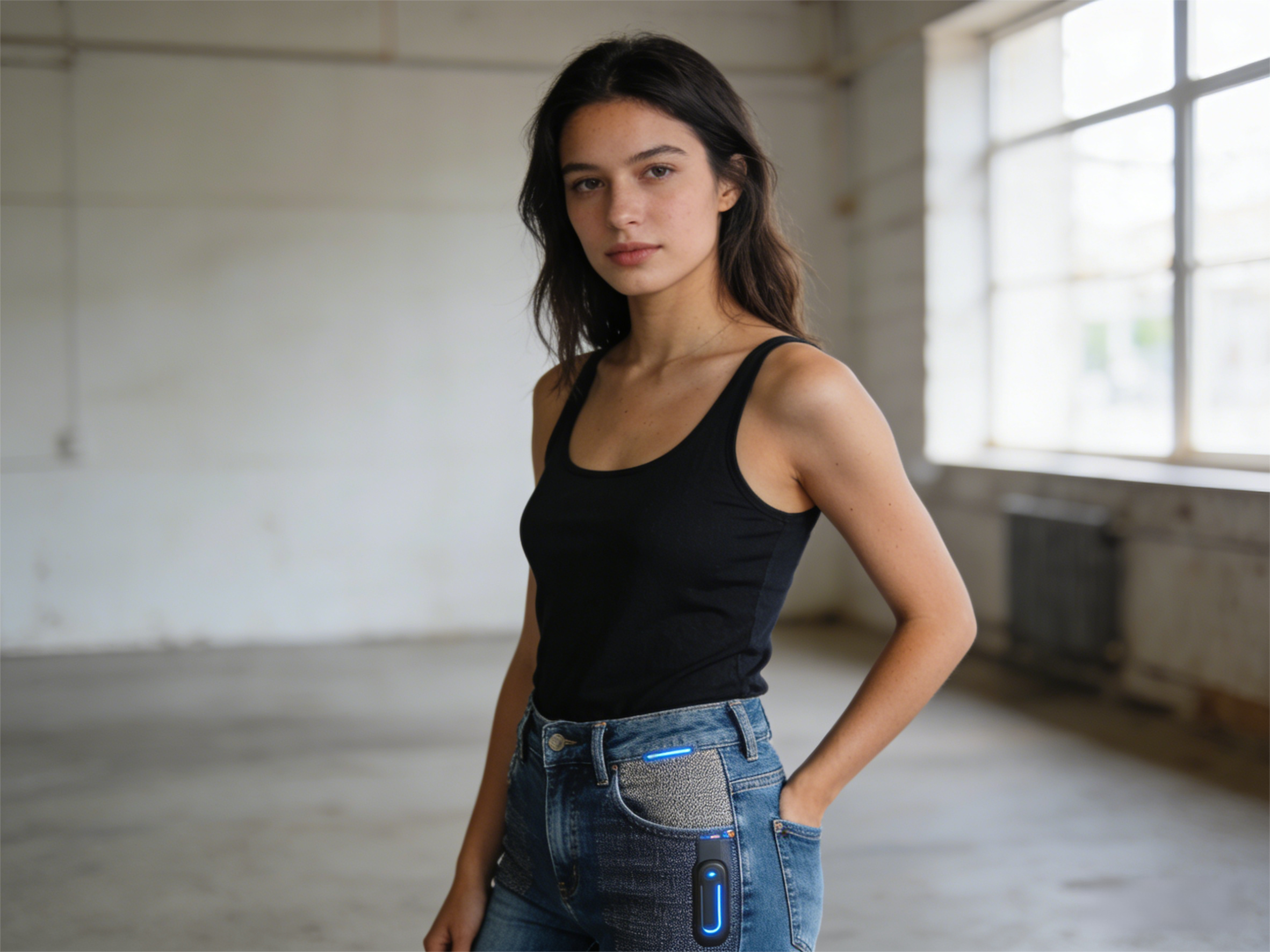
You find many types of smart fabrics in modern denim. These fabrics use advanced technology to improve comfort and performance. Some smart fabrics wick away moisture, keeping you dry during daily activities. Others allow air to flow through the denim, so you stay cool and avoid overheating. Stretchable fibers let you move freely, making your jeans fit better and feel more comfortable. Temperature-regulating fabrics adjust to your body heat, giving you warmth in cold weather and coolness in the summer. Some denim even includes built-in features, such as sensors or conductive threads, which add new functions for active lifestyles.
Here is a table showing how different smart fabric properties impact your comfort and performance:
Property | Impact on Comfort and Performance |
|---|---|
Moisture-Wicking | Keeps the wearer dry and comfortable by wicking away sweat. |
Breathability | Enhances airflow, preventing overheating and discomfort. |
Stretchability | Allows for greater movement and flexibility, improving fit and comfort. |
Temperature Regulation | Adjusts to body temperature, providing warmth in cold and coolness in heat. |
Built-in Features | Adds functionality, making jeans suitable for active lifestyles. |
Tip: When you choose denim with smart fabrics, you get jeans that work for many situations, from sports to everyday wear.
Integration Methods
You may wonder how manufacturers embed smart fabrics into denim. The process uses special weaving and finishing techniques. Some companies weave conductive fibers directly into the denim, so sensors and electronics become part of the fabric. Others use coatings or laminates to add features like waterproofing or heat resistance. Automation helps brands produce smart denim at scale, keeping quality high and costs lower.
Manufacturers face several challenges when adding smart fabrics to denim. Electronics must survive washing, daily wear, and exposure to the environment. Heat can damage sensitive components. Production costs rise with advanced processes. Scaling up for mass production requires efficient supply chains. Brands solve these problems by using reinforced fibers, waterproof coatings, and heat-resistant materials. Automation and mass production help reduce costs and keep quality consistent.
Here is a table showing common challenges and solutions:
Challenge | Description | Solution |
|---|---|---|
Durability of Integrated Electronics | Electronics must withstand wear and tear, washing, and environmental exposure. | Reinforced fibers, waterproof coatings. |
Heat Conductivity Issues | Poor heat conduction can damage electronics. | Development of heat-resistant materials. |
High Production Costs | Advanced processes increase costs. | Automation and mass production to reduce costs. |
Scaling Production | Efficient supply chains are needed for mass production. | Automated processes for integration without sacrificing quality. |
You see that smart denim combines technology and fashion. These methods make your jeans more durable, functional, and ready for the future.
Applications and Features of Smart Denim

Temperature and Moisture Control
You experience a new level of comfort when you wear smart denim. Advanced fabric technology allows denim jeans to regulate temperature and manage moisture better than traditional denim. You stay cool in hot weather and warm in the cold. Smart denim uses moisture-wicking fabric that pulls sweat away from your skin. This feature keeps you dry during daily activities or exercise. Conventional denim often traps heat and moisture, which can make you feel uncomfortable.
Smart denim incorporates advanced fabrics that provide moisture-wicking properties.
Temperature regulation is a key feature of smart denim, enhancing comfort.
Conventional denim typically has limited breathability and retains heat.
You notice the difference when you compare smart denim to regular denim. The breathability of the fabric improves your comfort, especially during long days. You can wear these jeans in many environments, from busy city streets to outdoor adventures. Smart denim processing uses sustainable dyeing and waterless dyeing methods to reduce the impact on the environment. These innovations make your jeans more functional and eco-friendly.
Tip: Choose denim with moisture-wicking and temperature-regulating fabric for all-day comfort, no matter the season.
Wearable Power and Sensors
You see denim jeans becoming more than just clothing. Smart denim processing now integrates wearable power sources and sensors directly into the fabric. You can charge small devices on the go, thanks to solar-powered fibers woven into the denim. These photovoltaic fibers use OPV and perovskite solar technology. You do not need to worry about washing your jeans, as the power system retains 72% efficiency after 30 washes. This makes smart denim practical for everyday use.
Feature | Description |
|---|---|
Power Source | Solar-powered through photovoltaic fibers woven into denim. |
Washability | Retains 72% efficiency after 30 washes. |
Device Charging | Enables charging small devices on the go. |
Technology Integration | Integrates OPV & perovskite solar technology. |
Commercial Outlook | 1-3 years for solar patches, 3-5 years for pilot production, 5-8 years for fully integrated denim. |
You benefit from embedded sensors in smart denim jeans. These sensors monitor your health and track your activity. You can measure heart rate, respiratory function, muscle activity, and hydration levels. Some denim garments even detect early signs of health issues, such as diabetic foot ulcers. Athletic wear tracks speed, cadence, posture, and recovery. Major brands like Levi’s and Google add touch-sensitive fibers and Bluetooth connectivity to their denim products. You control your devices with a simple touch on your jeans. Smart textiles in denim adjust temperature and monitor health metrics, making them popular among tech-savvy consumers and athletes.
Wearable garments can track heart rate, respiratory function, muscle activity, and hydration levels.
Compression shirts with embedded ECG sensors and socks that detect early signs of diabetic foot ulcers are examples.
Athletic wear tracks performance metrics like speed, cadence, posture, and recovery.
Embedded sensors in denim can monitor health metrics and track activity.
Major brands like Levi’s and Google are integrating touch-sensitive fibers and Bluetooth connectivity into their products.
Smart textiles in denim can adjust temperature and monitor health metrics.
The integration of technology is gaining traction among tech-savvy consumers and athletes.
Note: Smart denim processing combines wearable power, sensors, and sustainable dyeing to create jeans that support your active lifestyle.
Performance and Durability
You want denim jeans that last and perform well in any situation. Smart denim processing uses modern fabric to improve flexibility, moisture management, abrasion resistance, and breathability. You move freely because the fabric stretches with your body. You stay dry and comfortable, even during intense activity. High abrasion resistance means your jeans withstand daily wear and tear. Smart denim offers improved durability compared to traditional denim, which can sag and wrinkle over time.
Feature | Smart Denim | Traditional Denim |
|---|---|---|
Flexibility | Limited stretch and rigidity | |
Moisture Management | Superior moisture management | Poor moisture management |
Abrasion Resistance | High abrasion resistance | Lower abrasion resistance |
Breathability | More breathable | Less breathable |
Durability | Improved durability with modern textiles | Traditional durability but prone to sagging and wrinkling |
You can trust the quality of smart denim because manufacturers follow strict testing standards. These standards ensure your jeans meet high expectations for strength, color retention, and shrinkage. The ASTM D5034 standard measures the tensile strength of denim fabrics. The AATCC 61 test checks how well denim retains color after repeated washing. The AATCC 135 test evaluates how much denim shrinks after laundering.
Standard | Purpose |
|---|---|
ASTM D5034 | Measures tensile strength of denim fabrics. |
AATCC 61 | Assesses wash fastness of denim fabrics. |
AATCC 135 | Evaluates shrinkage of denim fabrics. |
ASTM D5034 evaluates fabric durability by measuring the maximum force a denim specimen can withstand before breaking.
AATCC 61 quantifies how well denim retains color after repeated washing.
AATCC 135 assesses how much denim shrinks after laundering.
You see that smart denim processing, sustainable dyeing, and waterless dyeing methods create jeans that last longer and perform better. You also benefit from customization and personalization options, which allow you to choose denim that fits your style and needs. Smart denim processing continues to evolve, making your jeans more reliable and adaptable for any environment.
Sustainability and Smart Fabric Utilization
Sustainable Production in Denim
You see sustainable denim changing the way brands approach fashion. Smart fabric utilization supports sustainable production by using technology to reduce pollution and water pollution. Many companies now use green methods like ozone fading, laser etching, and enzyme washing. These environmentally friendly finishing methods save water and cut chemical runoff. You notice that ozone fading saves about 12 liters of water per pair of jeans because it does not need rinse cycles. Laser etching uses zero water and creates precise patterns without pollution. Enzyme washing uses biodegradable enzymes and only 2–3 liters of water, giving denim a softer feel.
Brands focus on green environmental protection by using renewable energy and closed-loop systems. You see companies like Outerknown and Nudie Jeans lowering their carbon footprints by up to 40%. Natural dyeing avoids heavy metals, making denim safer for you and the environment. Closed-loop systems recover up to 98% of dye and chemicals, which minimizes waste and supports the circular economy. You benefit from technology that makes denim greener and more sustainable.
You help the environment when you choose sustainable denim made with smart technology. These jeans use less water, fewer chemicals, and more green energy.
Eco-Friendly Benefits for Consumers
You experience many eco-friendly benefits when you pick sustainable denim. Smart fabric utilization gives you jeans designed for cold-water washing, which saves energy at home by up to 30%. You support recycling and green practices every time you wear eco-friendly denim. Technology in denim manufacturing reduces environmental impact and pollution. You see less water pollution and fewer chemicals released into the environment.
Here is a table showing how green techniques help you and the planet:
Technique | Water Saved per Pair | Key Benefit |
|---|---|---|
Ozone Fading | ~12 liters | No rinse cycles needed, drastic water cut |
Laser Etching | 0 liters | Precise patterns, zero chemical runoff |
Enzyme Washing | 2–3 liters | Biodegradable enzymes, softer hand feel |
You notice brands using renewable energy and natural dyes to make denim more sustainable. These choices lower environmental impact and support environmental sustainability. You also see recycling and green technology making fashion more responsible. Eco-friendly denim manufacturing helps you protect the environment and address environmental concerns. You become part of the green movement in fashion by choosing sustainable denim.
Tip: Look for denim made with green technology and sustainable practices. You support green fashion and help reduce pollution.
Consumer Concerns and Care
Maintenance and Longevity
You want your smart denim jeans to last and stay comfortable. Caring for these jeans requires a few simple steps. Choose a low-heat or delicate cycle when you wash them. This prevents shrinkage and keeps the fabric soft. Dry your jeans with similar-weight fabrics to avoid pilling and deformation. Limit drying time to maintain the integrity of the material. Skip fabric softeners because they can reduce breathability and weaken the natural strength of denim.
Wash jeans only when truly needed to reduce water use and energy consumption.
Air out your jeans and spot-clean stains to extend their lifespan.
Avoid washing after every wear to prevent fabric degradation.
Mindful maintenance helps your jeans last longer and supports the environment. Reducing wash frequency also cuts down on CO₂ emissions from laundry. You contribute to sustainability by minimizing textile waste.
Manufacturers design premium denim to resist wear and tear. They use high-quality cotton and strong stitching. These jeans develop unique character over time and last for years. Mass-market denim may use lower quality materials and standard construction, which can lead to fading and holes.
Feature | Premium Denim | Mass-Market Denim |
|---|---|---|
Material Quality | High-quality cotton | Lower quality materials |
Construction | Careful construction | Standard construction |
Durability | Resists wear and tear | Prone to fading/holes |
Stitching | Strong stitching | Weaker stitching |
Longevity | Lasts for years | Shorter lifespan |
Unique Character | Develops over time | Limited development |
Cost and Accessibility
You may wonder about the price and availability of smart denim jeans. Premium options often cost more because they use advanced materials and technology. These jeans offer better durability and comfort. Mass-market choices are more affordable but may not last as long. Many brands now offer a range of prices, making smart denim accessible to more people. You can find options that fit your budget and style. As technology improves, prices may continue to drop, making sustainable fashion easier to access.
Tip: Invest in quality denim for longer wear and less impact on the environment.
You see smart fabric utilization making denim jeans more comfortable, durable, and functional. These innovations help you support sustainability and protect the environment. You notice denim changing with new technology and eco-friendly practices. If you want jeans that match your values and lifestyle, consider smart denim for your next purchase. You can help shape the future of fashion by choosing smarter options.
Smart denim gives you more choices and helps you make a positive impact.
FAQ
What makes smart denim different from regular jeans?
Smart denim uses advanced fabrics and technology. You get features like temperature control, moisture management, and built-in sensors. Regular jeans focus on style and durability but lack these innovative benefits.
Can you wash smart denim jeans like normal jeans?
You should use a gentle cycle and avoid high heat. Air drying helps maintain fabric quality. Skip fabric softeners to protect smart features. Always check the care label for specific instructions.
Are smart denim jeans safe for your skin?
Yes, smart denim uses skin-friendly materials. Brands test fabrics for safety and comfort. You can wear these jeans daily without worrying about irritation or allergic reactions.
How long do smart denim jeans last?
Smart denim jeans last longer than regular jeans. You get improved durability from reinforced fibers and advanced stitching. Proper care extends their lifespan, so you enjoy comfort and performance for years.
Do smart denim jeans cost more?
You may pay a higher price for smart denim. Advanced technology and premium materials increase costs. Many brands offer options at different price points, so you can find jeans that fit your budget.