
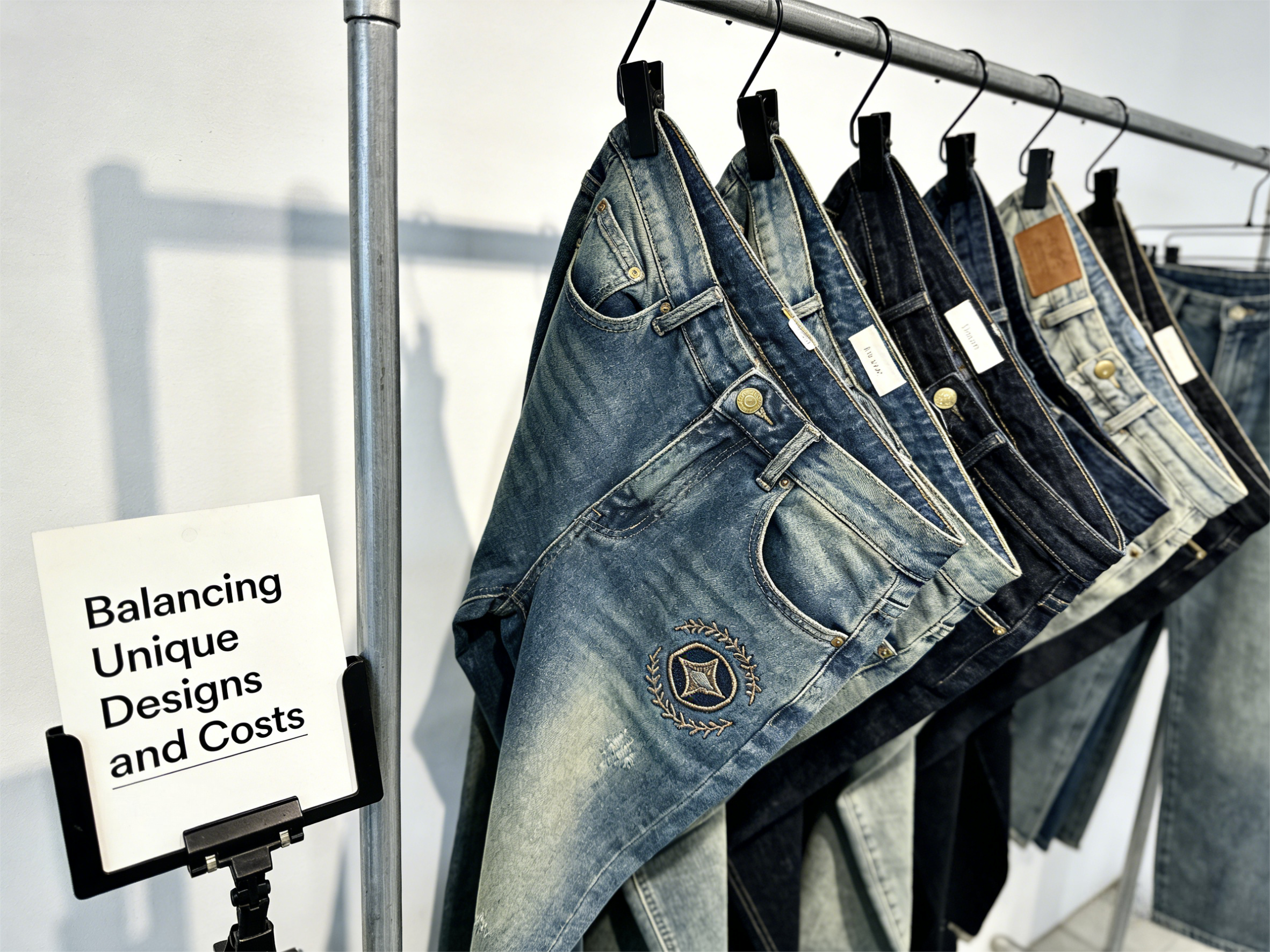
You can balance unique designs with costs in small-batch denim orders if you plan well and work efficiently. When you customize jeans or add special touches to a garment, the price per piece goes up, especially in the USA. For example, a Canadian brand paid $19 per unit for a 200-piece batch with custom acid wash, but that dropped to $11.30 per unit when they ordered 1,500 pieces. Check out this quick look at how order size affects cost:
MOQ Tier | Avg. Cost/Unit | Notes |
|---|---|---|
< 300 units | $18–$25 | High due to inefficiencies |
500–1,000 | $10–$15 | Moderate discount, still flexible |
3,000–10,000 | $7–$10 | Economies of scale start to apply |
10,000+ | $6–$8 | Best pricing, factory priority given |
To succeed, you need to get creative with your denim designs and make smart business moves.
Key Takeaways
Larger orders reduce the cost per unit. Aim for higher quantities to maximize savings.
Unique designs attract customers but can increase costs. Balance creativity with practicality to maintain profitability.
Building strong supplier partnerships allows for flexible minimum order quantities and better pricing. Invest in these relationships for long-term success.
Utilize technology and automation to improve efficiency and reduce waste in production. This can lead to significant cost savings.
Always run pilot tests before full production. This helps catch issues early and ensures high-quality garments.
The Small-Batch Denim Orders Challenge
Why Unique Designs Matter
You want your denim brand to stand out, right? Unique design details can make your garment pop in a crowded market. When you add something special, like flocked denim, you mix classic style with a touch of luxury. This helps your brand catch the eye of shoppers who want something different. You can also use these details to offer more choices, so your customers feel like the garment was made just for them. That’s how you build brand recognition and keep people coming back for more.
Unique denim designs, like flocked finishes, blend rugged and luxury vibes.
These designs let you reach different types of shoppers and boost your brand’s reputation.
Customization gives you the power to create a garment that feels personal and exclusive.
Cost Pressures in Small Runs
Small-batch denim orders come with their own set of challenges. You face higher costs because you can’t spread setup fees over thousands of pieces. In the USA, even a simple design can get expensive fast. Let’s look at some common problems brands face when they want unique design details in small runs:
Challenge | Problem | Resulting Impact | Why It Matters |
|---|---|---|---|
Costly Setup Times | Weaving machines need lots of calibration for each garment. | High costs per piece, more wasted material, less profit. | Big brands can handle this, but small ones struggle. |
Limited Skilled Staff | Complex denim designs need experts, which small factories may lack. | More mistakes, slower production, and old-fashioned styles. | You lose control and may need to outsource. |
Slow Response to Trends | Traditional methods can’t keep up with fast-changing fashion. | Missed chances to test new ideas and stay competitive. | You need to move fast in fashion. |
Difficulty in Customization | Unique design details often require high minimum orders and special tools. | You may have to use generic denim and lose your edge. | Standing out is key for your brand. |
You also need to plan for extra costs. Customization can add 10–20% more to your budget, and each sample or design change can cost $50–$150. Small-batch denim orders require smart planning so you can balance creativity with your bottom line.
Cost and Customization Factors

Design Complexity Impact
When you want your denim to stand out, you probably think about adding custom details. Maybe you picture extra seams, fancy hardware, or a special wash. These choices make your garment unique, but they also drive up costs. If you ask garment manufacturers in the usa for a custom design, they need skilled workers and special machines. More seams mean more time and labor. Premium trims and hardware cost more to buy and attach. If you want a custom acid wash or a flocked finish, you pay for extra steps and expensive equipment.
You should know that every custom detail adds to your budget. Garment manufacturers in the usa must follow strict labor laws and environmental rules. This means higher wages and compliance costs. When you choose a complex design, you pay for quality and safety. You also pay for the expertise needed to get the look just right. If you keep your design simple, you can save money and still get a quality garment.
Tip: Try to balance creativity with practicality. Sometimes, a small change in design can make a big impact without breaking the bank.
Sourcing Materials for Small Batches
Finding the right denim for your custom order can be tricky. If you want premium fabric, you often pay more, especially when you order small quantities. Many apparel manufacturers in the usa source materials domestically, which means higher prices compared to overseas options. You might see a 20–30% increase per yard when you buy less fabric. This can push your costs up fast.
Here’s a quick look at what you might pay for different types of denim:
Type of Denim | Price Range |
|---|---|
14 oz Selvedge Denim | $8.00 – $12.00 |
Stretch Denim | $5.00 – $8.00 |
Organic or TENCEL® | $7.00 – $10.00 |
Note: Sourcing small quantities can increase costs by 20–30% per yard. |
If you want a custom garment, you need to plan your investment. You can sometimes lower costs by joining shared container programs or bulk yarn agreements. These strategies help you combine orders with other brands and get better prices. You also reduce waste and improve efficiency.
Production Methods and MOQs
Production methods play a huge role in your final costs. If you work with usa-based garment factories, you pay more for labor and materials. These factories focus on quality at scale, but small runs don’t benefit from bulk discounts. Minimum order quantities (MOQs) can be a big hurdle. Many factories set a threshold that you must meet, or you pay a premium for your custom garment.
If you can’t meet the MOQ, you might struggle to launch a new style or test a limited run. You can get around this by joining shared programs or sourcing bulk yarn. Some brands look to China for manufacturing because costs are lower. You get more flexibility and better profit margins, even with small batches.
You should also think about design simplification. If you choose a simpler design, you save money and speed up production. Hybrid models let you keep some custom features while cutting costs. On-demand production helps you avoid excess inventory and waste, which saves money in the long run.
Note: Younger shoppers care about sustainability and personalization. If you offer a custom garment with eco-friendly materials, you can charge a premium and build loyalty.
Managing Customization and Costs
Standardizing Processes
You want to keep costs low when you order custom denim in small batches. Standardizing your processes helps you do that. When you use proven finishing techniques, you cut down on waste and speed up production. Many garment manufacturers in the usa rely on these methods to deliver consistent quality. You can choose from a range of process standardization techniques that work well for small runs.
Here’s a table showing some popular techniques:
Technique | Description |
|---|---|
Rinse Wash | Basic water wash to remove excess indigo & soften fabric. Minimal mechanical abrasion. |
Stone Wash / Enzyme Wash | Stone Wash uses pumice stones for abrasion; Enzyme Wash uses cellulase for eco-friendly fading. |
Laser Finishing | Automated laser systems for high precision, no water/chemicals, suitable for mass customization. |
Ozone Wash | Uses ozone gas to lighten denim with minimal water and energy, a sustainable alternative. |
Sustainable Alternatives | Includes waterless dyeing systems and bio-enzymes to replace toxic chemicals. |
Potassium Permanganate Spray | Applied locally for highlight effects, often combined with other techniques. |
Resin Coating | Creates permanent creases using thermocurable resins, cured via baking or infrared systems. |
Tinting / Overdyeing | Post-wash dyeing for unique color effects on indigo base. |
You can mix and match these techniques to get the look you want. If you keep your design simple, you save money and get faster turnaround. You also help maintain quality control systems, which means fewer mistakes and less waste. Standardizing your finishing steps makes it easier for a custom clothing manufacturer in the usa to deliver the results you expect.
Tip: Pick finishing methods that match your brand’s style and budget. You don’t have to use every option. Sometimes, less is more.
Supplier Partnerships
Building strong partnerships with your suppliers gives you more control over pricing and flexibility. If you work with wholesale clothing manufacturers in the usa, you can negotiate better deals and lower minimum order quantities. Many mills now offer flexible MOQs, which is great for brands that want to test new styles or run small batches. You get low moq production support and can avoid paying extra for custom orders.
Here’s how supplier partnerships help you:
Flexible minimum order quantities let you order small batches without triggering custom production costs.
Direct relationships with mills mean faster decisions and clearer lead times.
Long-term commitments can unlock special pricing or priority slots.
Aspect | Impact on Pricing and Flexibility |
|---|---|
MOQ Flexibility | Lower MOQs increase per-unit costs; negotiate sliding-scale pricing to balance flexibility with budget. |
Supplier Relationship Depth | Strong partnerships can unlock MOQ waivers or faster slots—consider long-term volume commitments in exchange. |
If you work with private label clothing manufacturers in the usa, you can often combine orders to get bulk pricing discounts. This strategy helps you save money and get better quality. You also improve your supply chain and reduce the risk of delays. Many apparel manufacturers in the usa now focus on building direct relationships with brands, which leads to more efficient manufacturing and better results.
Note: A good supplier partnership can help you manage costs, improve quality, and keep your brand competitive.
Technology and Automation
You can use technology and automation to lower costs and boost efficiency in custom denim production. Many usa-based garment factories now use AI tools and digital printing to speed up manufacturing and improve quality control systems. Automation helps you get more out of your resources and reduces waste.
Check out this table to see how automation changes the game:
Metric | Before Automation | After Automation | Improvement |
|---|---|---|---|
Fabric Yield | 75% | 85% | +10% |
Energy Consumption | N/A | 30% reduction | N/A |
Wastewater Production | N/A | 60% reduction | N/A |
A denim facility in North Carolina saw big improvements after switching to lean automation. They cut lead time by 32%, reduced fabric waste by 45%, and lowered carbon emissions per garment by 28%. Labor efficiency went up by 18%. If you use AI-driven fabric simulation, you avoid wasteful sampling and save money upfront. Digital printing lets you offer custom designs on demand, which is perfect for brands that want to stand out. You get more flexibility and can respond quickly to fashion trends.
Callout: Technology helps you deliver quality garments faster and with less waste. You also support sustainable practices and improve your bottom line.
Pilot Runs and Testing
Running pilot tests before full production helps you spot problems early and save money. You can test your custom garment under real manufacturing conditions. This step lets you check stitching, fit, trims, and dyeing before you commit to a big order. If you work with a low moq clothing manufacturer in the usa, pilot runs help you fix measurements and construction issues before bulk cutting starts.
Here’s what pilot runs do for you:
Test processes in real conditions
Validate sample quality for bulk output
Identify issues in stitching, fit, trims, or dyeing
Assess production line efficiency and capacity
Reduce risk of mass defects and shipment delays
If the pilot run does not meet your standards, you can make corrections before moving forward. This step protects your investment and helps you deliver high-quality garments every time. Many private label clothing manufacturers in the usa and wholesale clothing manufacturers in the usa offer pilot runs as part of their service. You get peace of mind and better results.
Tip: Always run a pilot before bulk production. It’s the best way to catch mistakes and keep your costs under control.
You can also use smart strategies to reduce costs. Optimize your fabric selection, consolidate orders, and simplify design elements. Work with apparel manufacturers in the usa who have strong supply chains and can negotiate bulk pricing. If you choose a usa clothing production company that values sustainability, you can build loyalty and charge a premium for your custom denim. Fashion manufacturing companies in the usa now focus on efficient resource use and process optimization, which helps you stay competitive.
Profitability in Small-Batch Denim Orders
Smart Pricing Models
You want your small-batch denim orders to make money, right? The best way is to pick a pricing model that fits your brand and your customers. Many successful brands use direct-to-consumer pricing. Gustin, Brave Star, and SOSO all sell high-quality products straight to shoppers. Gustin uses limited-time pre-orders, so you only make what people want. Brave Star keeps prices low but still offers American craftsmanship. SOSO lets you build premium custom jeans for a fair price. These models help you avoid retail markups and keep your garment business profitable.
Brand | Pricing Model | Key Features |
|---|---|---|
Gustin | Direct-to-consumer | Crowdfunded, made in USA, pre-orders, quality |
Brave Star | Direct-to-consumer | Made in LA, affordable, durable denim |
SOSO | Custom-built jeans | Tailor-made, high-quality, built-to-order |
Tip: Direct sales and pre-orders help you control costs and offer high-margin product business opportunities.
Reducing Waste and Inventory Risk
You can boost profits by cutting waste and managing your stock wisely. Lean manufacturing helps you use every yard of fabric and every minute of labor. If you use deadstock fabrics, you lower costs and help the planet. A London brand did this and sold out in three weeks with 42% less cost. You should also use smart inventory techniques. Data analytics lets you predict what will sell. You can balance stock levels, buy only what you need, and avoid markdowns. This keeps your cash flowing and your garment business strong.
Technique | Description |
|---|---|
Use sales data to predict demand and plan purchases. | |
Optimize Stock Levels | Keep just enough inventory to meet demand. |
Strategic Purchasing | Focus on high-demand garments for better deals. |
Reduce Markdowns | Match inventory to demand and avoid discounts. |
Improve Cash Flow | Move slow stock out and reinvest in new garment styles. |
Note: Waste reduction and smart stock management turn your garment business into a high-margin product business.
Value-Added Services
You can stand out by offering more than just a garment. Many manufacturers now provide custom service, special washing, and unique fabric choices. You can design denim clothing that fits your customer’s style. Private packaging and flexible shipping make your brand look professional. Some usa factories even offer credit payment terms to help you grow. These value-added services make your premium custom jeans feel special and keep customers coming back for high-quality products.
Service Type | Description |
|---|---|
Custom Service | Tailored denim products for each customer |
Custom Washing | Unique finishes for every garment |
Custom Fabric | Special fabric choices for high-quality products |
Denim Clothing Design | Design help for your garment ideas |
Private Packaging | Custom boxes and bags for your brand |
Shipping Solution | Fast and flexible delivery options |
Credit Payment Terms | Easy payment plans for buyers |
Callout: Value-added services help you build loyalty and create high-quality products that stand out in the denim market.
You can earn 5 to 10 times more profit per garment with small-batch denim orders than with mass production. You get flexibility, lower investment, and a chance to offer something unique.
Lessons from the Industry
Case Study: Small-Batch Success
You might wonder if small-batch denim can really work. Let’s look at what happens when brands get it right. One small label launched a limited run of custom jeans. They focused on quality, fit, and building a loyal customer base. They worked with a trusted factory in the usa and kept their designs unique but manageable. The results speak for themselves:
Outcome Type | Measurement |
|---|---|
Customer Return Rate | |
Production Units Delivered | 4,800 units with under 0.8% returns |
Customer Retention Rate | 18% higher repeat purchase rate |
Returns Rate | Reduced by 30–40% |
Brand Loyalty | Attracted niche communities |
You can see how a focus on quality and customer experience pays off. The brand kept returns low and built a strong following. They didn’t chase every trend. Instead, they listened to their customers and delivered what people wanted. That’s how you create a sustainable business with small-batch denim.
Tip: Start small, listen to your buyers, and keep your quality high. You’ll build loyalty and stand out in the market.
Common Pitfalls to Avoid
Many new brands make the same mistakes when they start with small-batch denim. You can avoid these traps if you know what to watch for. Here are the most common pitfalls:
Mistake Type | Description |
|---|---|
Following Fickle Trends | Chasing fast trends can leave you with unsold inventory. |
Poor Inventory Management | Losing track of stock leads to waste and extra costs. |
Large Minimum Order Quantities | Ordering too much can fill your shelves with dead stock. |
Quality or Fit Issues | Bad fit or defects cause returns and unhappy customers. |
Market Misjudgment | Launching styles that miss your audience means slow sales and lost money. |
You don’t have to learn the hard way. Stay organized, know your market, and focus on quality. If you avoid these mistakes, you’ll have a better shot at success in the denim world.
Note: The best brands keep things simple, stay flexible, and always put the customer first.
You can balance unique denim designs and costs with smart planning and efficient operations. If you skip margin planning or underestimate lead times, you risk overstock and cash flow problems. To stay profitable, remember:
Suppliers in the usa often use tiered pricing, so small runs cost more.
Custom touches like special packaging add extra fees.
Creative solutions make a big difference. Check out how brands boost profits:
What Works | Why It Matters |
|---|---|
Sustainable fashion | Market grows fast—26.8% CAGR |
Eco-friendly focus | Two-thirds of young shoppers pay more for green gear |
Smart partnerships | Supplier choice, tech, and flexibility drive success |
Try these strategies to keep your customers happy and your denim business strong.
FAQ
What is the smallest denim order I can place?
Most factories let you start with 100 to 200 pieces. Some offer even lower minimums if you join shared production runs. Always ask your supplier about their policy before you design your collection.
How do I keep costs down with unique designs?
You can simplify your design, use standard trims, and pick common washes. Try combining your order with other brands. This helps you get better pricing and reduces waste.
Can I make small-batch denim in the usa?
Yes! Many factories in the usa now support small-batch production. You get high quality, flexible minimums, and faster shipping. Just remember, costs per piece will be higher than overseas.
What if my first sample isn’t perfect?
Don’t worry! Use pilot runs to test and adjust your design. Most suppliers expect changes. Give clear feedback, and you’ll get the fit and finish you want.