
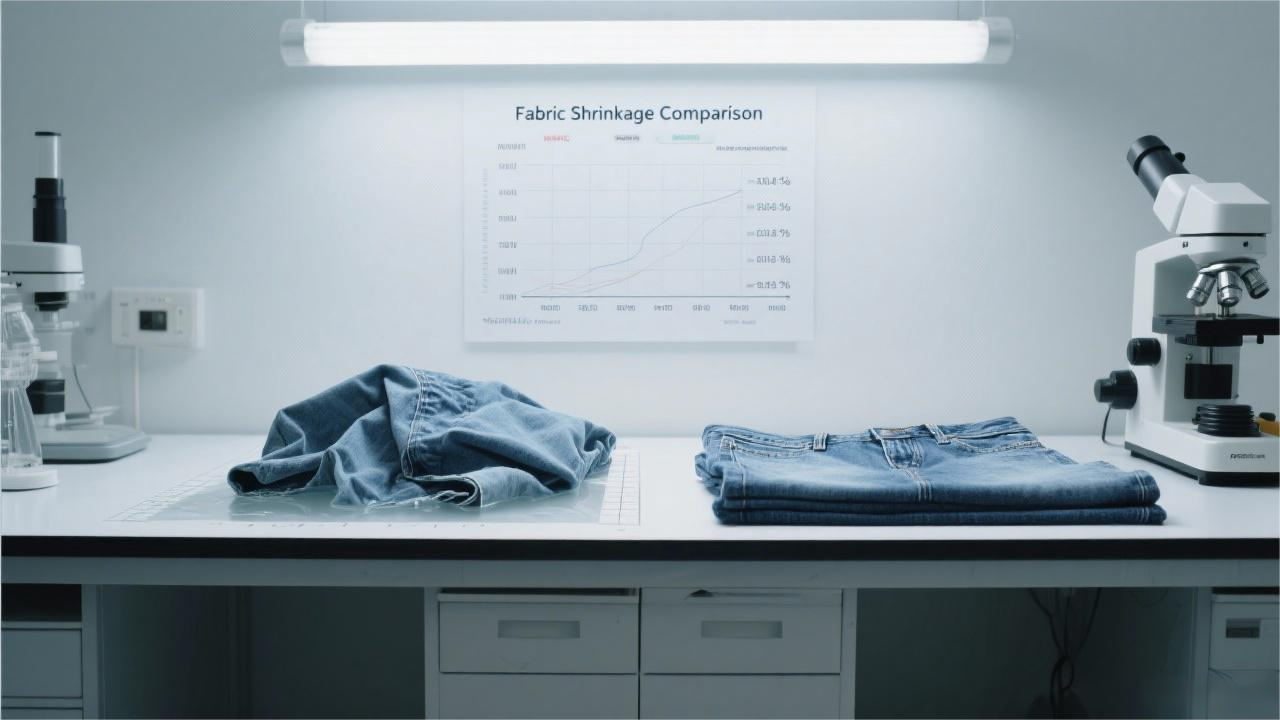
Cotton denim shrinks the most when compared to cotton/spandex and cotton/poly/spandex blends. You notice this shrinkage after washing, especially if you use heat. Cotton/spandex denim shows less shrinkage because spandex adds stretch and stability. Cotton/poly/spandex denim offers the least shrinkage, as polyester and spandex help maintain shape. Shrinkage changes how your jeans fit, so you pay close attention to care labels and laundry routines. When you understand denim shrinkage, you make smarter choices about size and care. You also benefit from Denim Shrinkage Control Strategies, which help keep your jeans looking their best.
Check care labels to see how much shrinkage you should expect.
Wash in cold water and air-dry to protect fit and color.
Pre-wash new jeans to account for any shrinkage before wearing.
Key Takeaways
Cotton denim shrinks the most, losing up to 15% after the first wash. Choose raw denim for a true shrink-to-fit experience.
Cotton/spandex blends shrink less, typically 1% to 3%. This blend offers comfort and helps maintain shape after washing.
Cotton/poly/spandex denim shrinks the least, usually under 2%. This blend provides durability and easy care, making it ideal for everyday wear.
Always wash jeans in cold water and air dry to minimize shrinkage. High heat from dryers can cause significant size loss.
Check care labels and fiber content before buying. This helps you choose the right denim type and understand its shrinkage potential.
Denim Shrinkage Overview
You need to understand how different types of denim react when you wash and wear them. Shrinkage changes the fit and feel of your jeans. The amount of shrinkage depends on the fiber content and how the denim was made. Let’s look at how cotton denim, cotton/spandex denim, and cotton/poly/spandex denim compare.
Cotton Denim Shrinkage
You see the most dramatic shrinkage in cotton denim, especially when you choose raw denim. Raw denim means the fabric has not gone through any washing or preshrinking process. Many people love raw denim because it offers a true shrink-to-fit experience. You buy your jeans a little bigger, then wash them to let them mold to your body. This process is popular with denim fans who want a custom fit.
Raw denim can shrink a lot. You may see your jeans lose up to 10% to 15% of their size after the first wash. This happens because cotton fibers relax and contract when they meet water and heat. If you pick unsanforized raw denim, you get the full shrink-to-fit effect. Sanforized denim, which is pre-treated to control shrinkage, shrinks much less—usually only 1% to 3%.
Here’s a table to help you compare:
Type of Denim | Typical Shrinkage Rate |
|---|---|
Raw Denim (Unsanforized) | 10% – 15% |
Sanforized Denim | 1% – 3% |
100% Cotton Denim | 3% – 5% |
You notice that even washed cotton denim can shrink 2% to 5% after a few washes. Industry tests like AATCC 135 and ISO 5077 measure this shrinkage. Most brands aim for less than 3% shrinkage in their finished jeans. If you want a true shrink-to-fit journey, you should choose raw denim and follow the care instructions closely.
Tip: Always check if your jeans are raw denim or sanforized. This tells you how much shrink-to-fit you should expect.
Cotton/Spandex Denim Shrinkage
You get less shrinkage when you wear cotton/spandex denim. Spandex adds stretch and helps the fabric bounce back after you move. This means your jeans keep their shape better, even after washing. You still see some shrinkage, but it is much less than with raw denim.
Cotton/spandex denim usually shrinks about 1% to 3%. The spandex fibers do not shrink like cotton. They help the denim recover its shape, so you do not get baggy knees or hips. You still need to follow care instructions, but you do not have to worry as much about major shrink-to-fit changes.
Here’s what happens:
Cotton fibers contract with water and heat, causing shrinkage.
Spandex resists shrinking and adds stretch.
The blend gives you comfort and a more stable fit.
If you want jeans that move with you and do not shrink much, cotton/spandex denim is a smart choice. You still get the look of denim, but with less risk of losing your fit.
Cotton/Poly/Spandex Denim Shrinkage
You see the least shrinkage in cotton/poly/spandex denim. Polyester makes the fabric strong and stable. It does not shrink much, even with heat. Spandex adds stretch and helps the jeans keep their shape. This blend is great if you want jeans that stay the same size and fit after many washes.
You can expect shrinkage of less than 2% with this blend. Polyester and spandex work together to control shrinkage and keep your jeans looking new. You do not get the classic shrink-to-fit effect of raw denim, but you gain easy care and long-lasting fit.
Here’s a quick look at how each fiber acts:
Polyester resists shrinking and adds strength.
Spandex gives stretch and shape recovery.
Cotton adds softness and breathability.
Fabric Type | Control Method | |
|---|---|---|
Cotton | 2–5% | Sanforization, washing test |
Polyester | 0–1% | Heat-setting, minimal shrinkage |
Spandex / Lycra | <1% | Heat-setting, blended carefully with other fibers |
You get jeans that are easy to care for and keep their fit. If you want to avoid the surprises of shrink-to-fit, this blend is your best bet.
Note: Fiber composition changes how much your jeans shrink. Pure cotton denim shrinks the most. Blends with polyester and spandex shrink much less.
Why Shrinkage Rates Differ
You see big differences in shrinkage because of the fibers in your denim. Here’s why:
Pure cotton denim, especially raw denim, shrinks a lot because cotton fibers contract with water and heat.
Polyester adds stability and strength, so denim with polyester shrinks less.
Spandex gives stretch and helps denim keep its shape, reducing shrinkage.
A blend like 70% cotton and 30% polyester shrinks less than 100% cotton denim.
You need to know the fiber content to predict how your jeans will fit after washing. If you want a true shrink-to-fit experience, raw denim is the way to go. If you want easy care and less shrinkage, choose a blend with polyester and spandex.
Tip: Always read the care label and fiber content before you buy. This helps you pick the right denim for your needs.
Factors Influencing Denim Shrinkage
Washing and Drying Effects
You play a big role in how much your denim shrinks by the way you wash and dry it. Hot water causes cotton fibers to contract, which leads to more shrinkage. If you use a dryer on high heat, you increase the chance of your jeans getting smaller. Air drying or using a low-heat setting helps keep your denim closer to its original size. Washing your jeans less often also helps preserve their fit. Each wash and dry cycle adds up, so frequent laundering can cause gradual shrinkage over time.
Here is a quick table to show how different factors affect shrinkage:
Factor | Effect on Shrinkage |
|---|---|
Hot Water | Increases shrinkage |
Cold Water | Minimizes shrinkage |
High-Heat Drying | Causes significant shrinkage |
Air Drying/Low Heat | Reduces shrinkage |
Frequent Washing | Leads to cumulative shrinkage |
Tip: Wash your denim in cold water and let it air dry to help maintain the fit and reduce shrinkage.
Fiber Composition Impact
The fibers in your denim decide how much it will shrink. Cotton fibers shrink more than synthetic fibers. When you choose jeans with a higher cotton content, you notice more shrinkage after washing. Blends with polyester or spandex shrink less because these fibers resist heat and moisture. The way the denim is woven also matters. A tighter weave and higher-quality fabric tend to shrink less. Modern denim often mixes cotton with polyester or elastane to balance comfort, stretch, and shrinkage control.
100% cotton denim: more shrinkage
Cotton/polyester blends: less shrinkage
Cotton/spandex blends: less shrinkage and more stretch
Temperature and Wear
Temperature affects shrinkage every time you wash or dry your jeans. Warm or hot water and high dryer heat make cotton fibers relax and contract, which leads to more shrinkage. Cold water and gentle drying protect the fabric. Over time, repeated wear and laundering cause denim to shrink by about 2% to 5%. Choosing a low-heat or delicate cycle and limiting drying time help prevent your jeans from getting too tight. You can keep your denim looking and fitting great by paying attention to these details.
Preshrunk Denim and Shrinkage Control
What Is Preshrunk Denim?
You often see the term preshrunk denim when shopping for jeans. Preshrunk denim means the fabric has already gone through a process to reduce future shrinkage. This process helps you keep the fit you want, even after several washes. You do not have to worry about your jeans suddenly becoming too tight or short.
Manufacturers use several steps to make preshrunk denim:
The fabric is exposed to steam or water. This step allows the denim to shrink naturally before it becomes jeans.
Workers dry and press the denim. This stabilizes the fibers and locks in the shape.
Some factories use mechanical stretching. This smooths the material and ensures a uniform shape for every piece.
Preshrunk denim usually goes through a treatment called sanforization. This process stabilizes the fabric and reduces shrinkage after you wash your jeans. You get denim that keeps its size and shape. You enjoy a consistent fit every time you wear your jeans.
You benefit from preshrunk denim in many ways. You do not need to size up or guess how much your jeans will shrink. You get reliable sizing, which makes shopping easier. You also save time and money because your jeans last longer and look better after each wash.
Tip: Always check the label for preshrunk denim. This helps you know what to expect after washing.
Denim Shrinkage Control Strategies
You can use several denim shrinkage control strategies to keep your jeans looking and fitting their best. These strategies work for all types of denim, including preshrunk denim, cotton/spandex blends, and cotton/poly/spandex blends.
Here are some of the most effective denim shrinkage control strategies:
Wash your jeans inside out in cold water. This helps prevent shrinkage and protects the color.
Air dry your jeans. This method maintains the fit and comfort of your denim.
Avoid tumble drying. High heat from dryers can cause denim to shrink quickly and lose its shape.
You can also follow these steps for even better results:
Use cold water for every wash. This is the first step in denim shrinkage control strategies.
Skip the high heat from machine dryers. High temperatures shock cotton fibers and make them contract.
Hang your jeans to air dry. This keeps the denim fibers relaxed and prevents heat shrinkage.
The intense, concentrated heat from a standard machine dryer is the real culprit behind your favorite pair suddenly feeling a size too small. High heat essentially shocks the cotton fibers, forcing them to contract and locking them into that shrunken state.
Preshrunk denim gives you a head start in shrinkage control. You still need to use smart denim shrinkage control strategies to protect your jeans. Even preshrunk denim can change shape if you use hot water or high heat. You should always read the care label and follow the instructions for your specific denim type.
You can also look for jeans labeled as preshrunk denim if you want the least amount of shrinkage. Preshrunk denim offers the most reliable fit and makes denim shrinkage control strategies easier to follow. You do not have to worry about dramatic changes in size or shape.
You can combine preshrunk denim with good denim shrinkage control strategies for the best results. This approach helps you keep your jeans looking new and fitting well for a long time. You get the comfort, style, and durability you want from your denim.
Note: Preshrunk denim and proper care go hand in hand. You get the best results when you use both.
Denim Type | Preshrunk Treatment | Shrinkage Risk | Best Care Strategy |
|---|---|---|---|
100% Cotton (Raw) | No | High | Cold wash, air dry, avoid heat |
100% Cotton (Preshrunk) | Yes | Low | Cold wash, air dry |
Cotton/Spandex (Preshrunk) | Yes | Very Low | Cold wash, air dry |
Cotton/Poly/Spandex (Preshrunk) | Yes | Minimal | Cold wash, air dry |
You can see that preshrunk denim, especially when combined with blends, gives you the lowest risk of shrinkage. You still need to use denim shrinkage control strategies to keep your jeans in top condition.
You have the power to control denim shrinkage. Choose preshrunk denim, follow smart denim shrinkage control strategies, and enjoy jeans that fit perfectly every time.
Pros and Cons of Denim Fabric Types
Cotton Denim: Advantages and Drawbacks
You often choose cotton denim for its classic look and feel. This denim fabric stands out for breathability and comfort. You stay cool and comfortable, especially in warmer weather. Over time, cotton denim develops a unique worn-in look that many people love. You also get strong durability, so your jeans last through many wears.
However, you need to watch out for shrinkage. Cotton denim can shrink a lot when you wash it, especially if you use hot water or a dryer. The fabric can also feel stiff at first, which means you may need to break it in before it feels soft. Here is a quick comparison:
Aspect | Advantages | Disadvantages |
|---|---|---|
Shrinkage | N/A | Can shrink significantly when washed |
Comfort | Breathability: Keeps you cool and comfortable | Rigidity: Can feel stiff and less forgiving |
Durability | Strong and develops a unique worn-in look over time | N/A |
Tip: If you want jeans that mold to your body and last, cotton denim is a great choice. Just remember to follow care instructions to control shrinkage.
Cotton/Spandex Denim: Pros and Cons
You get more flexibility when you pick cotton/spandex denim. This denim fabric stretches with your movements, so you feel comfortable all day. The spandex helps your jeans keep their shape, even after many washes. You do not have to worry as much about shrinkage, and you enjoy a fit that stays true.
On the other hand, cotton/spandex denim may not develop the same personalized fit as pure cotton. The stretch can also make the fabric less durable over time compared to 100% cotton. Here is how they compare:
Type of Denim | Pros | Cons |
|---|---|---|
100% Cotton Denim | Authentic feel, durable, custom fit over time with wear | Limited initial stretch, requires proper care to prevent shrinkage |
Cotton/Spandex Denim | Immediate stretch and comfort, ideal for flexibility | May not develop a personalized fit over time, less durable than pure cotton |
Note: Choose cotton/spandex denim if you want jeans that move with you and keep their shape.
Cotton/Poly/Spandex Denim: Pros and Cons
You find the most stability and easy care with cotton/poly/spandex denim. This blend resists shrinking, so your jeans keep their size and shape after many washes. The polyester adds strength, which improves durability. You also get comfort from the cotton and stretch from the spandex.
Some people notice that this denim fabric feels less natural than pure cotton. The blend can also be more sensitive to heat during washing. Here is a comparison:
Property | Cotton/Poly/Spandex Blend | Pure Cotton |
|---|---|---|
Shrinkage | Less likely to shrink | Tends to shrink |
Durability | More durable | Less durable |
Comfort | Comfortable | Very comfortable |
Feel | Less natural feel | Natural feel |
Heat Sensitivity | Sensitive during washing | Less sensitive |
Tip: If you want jeans that are easy to care for and last a long time, cotton/poly/spandex denim is a smart pick.
Sizing and Care Tips
Choosing the Right Size
You want your jeans to fit well from the start. If you buy shrink-to-fit jeans, you should plan for some changes after washing. Many denim experts suggest sizing up when you shop for jeans made from pure cotton or raw denim. This helps you avoid jeans that feel too tight after the first wash. Here is a simple guide to help you choose the right size:
Size up by one or two sizes to allow for shrinkage, especially with shrink-to-fit jeans.
Soak your jeans in lukewarm water for 30 to 60 minutes before wearing them for the first time.
Measure your jeans before and after soaking to see how much they change.
Pick blends with spandex or polyester if you want less shrinkage and a more consistent fit.
Tip: Always check the label for fiber content and shrinkage instructions before you buy.
Best Practices for Washing
You can keep your jeans looking new by following smart washing habits. Turn your jeans inside out before washing. Use cold water to protect the color and reduce shrinkage. Wash your jeans less often to help them last longer. Air drying is the best way to keep the shape and size of your jeans. Machine drying can cause extra shrinkage, especially for shrink-to-fit jeans.
Washing Method | Effect on Jeans |
|---|---|
Cold Water | Maintains fit and color |
Air Drying | Prevents shrinkage |
Machine Drying | Increases shrinkage |
Note: Always avoid high heat when caring for shrink-to-fit jeans.
What to Expect After Laundering
You notice changes in your jeans after the first wash. Shrink-to-fit jeans will mold to your body and may lose up to 10% of their original size. Cotton blends with spandex or polyester shrink less and keep their shape better. You may see slight tightening at the waist and legs. If you follow care instructions, your jeans will stay comfortable and last longer.
😊 Remember: Shrink-to-fit jeans offer a custom fit after washing, while blends provide easy care and reliable sizing.
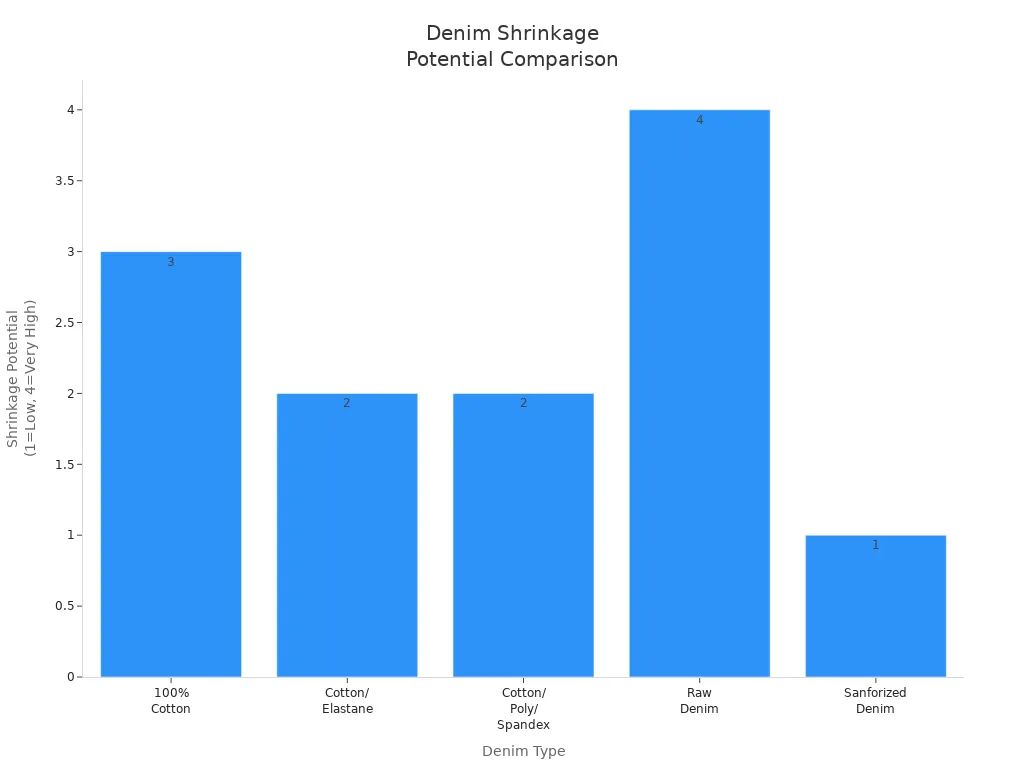
You see clear shrinkage differences among denim types. Cotton denim shrinks the most, while cotton/spandex and cotton/poly/spandex blends shrink less. Review this table for a quick comparison:
Denim Type | Shrinkage Potential | Care Instructions |
|---|---|---|
100% Cotton | High | Cold wash, air dry. Avoid dryer unless intentional. |
Cotton/Elastane (Stretch) | Medium | Cold wash, gentle cycle. Tumble dry on low or hang. |
Cotton/Poly/Spandex | Medium | Similar to cotton/spandex, may lose elasticity over time. |
To keep your jeans fitting well, wash in cold water and air dry. Think about your daily routine when choosing the best jeans. Cotton jeans work for classic style, while stretch blends suit active days. Pick what matches your needs and enjoy denim that lasts.
FAQ
How much will my 100% cotton denim jeans shrink?
You can expect 100% cotton denim to shrink between 3% and 10%, depending on whether the fabric is raw or preshrunk. Always check the care label for details.
Can I prevent my jeans from shrinking?
Wash your jeans in cold water and air dry them. Avoid high heat in the dryer. These steps help you keep the original fit and size.
Do stretch denim jeans shrink less than regular denim?
Yes. Stretch denim with spandex or polyester shrinks less than pure cotton denim. The added fibers help your jeans keep their shape and size after washing.
Should I size up when buying denim?
If you buy raw or 100% cotton denim, you should size up to allow for shrinkage. For stretch or blended denim, buy your usual size for the best fit.