
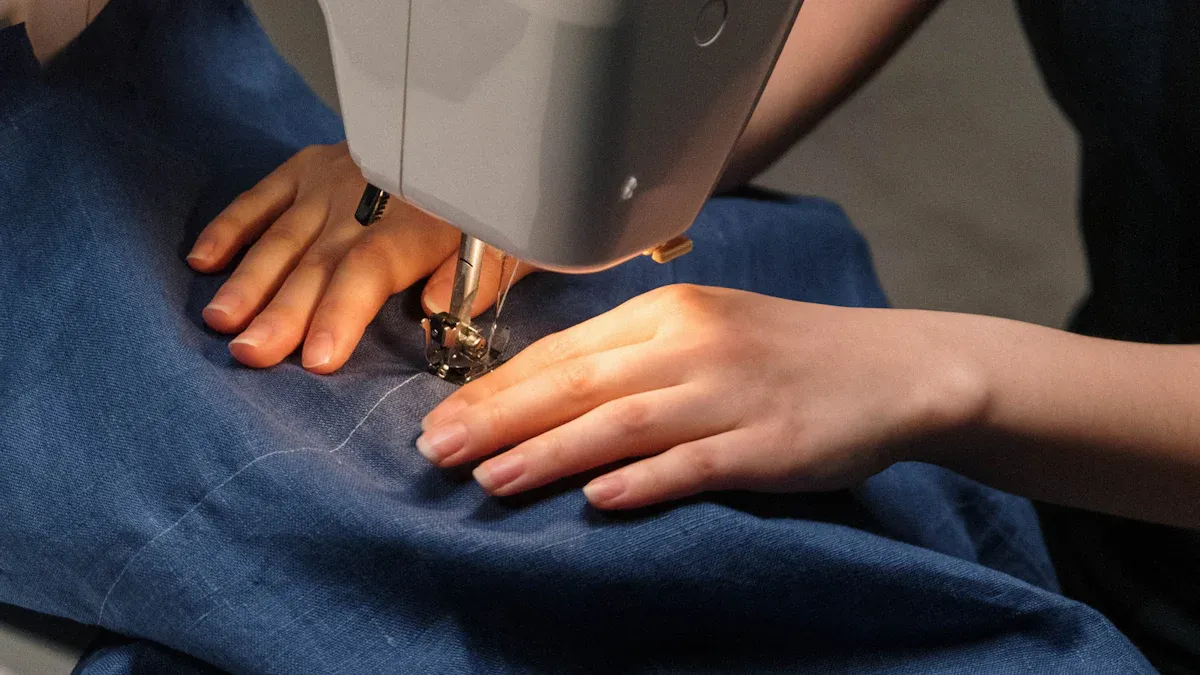
You can achieve reliable results in denim finishing by using ai-stabilized denim. Automation and AI work together to ensure every batch meets strict quality standards. Computer vision and AI-driven quality control have reduced rework by 68% and cut inspection time in half. These improvements lead to faster production and greater trust from buyers.
Benefit | Result | Impact |
|---|---|---|
Rework reduction with computer vision | 68% | Batch consistency |
Inspection time decrease | 50% | Faster quality control |
Defect rates | Near-zero | Buyer trust |
Key Takeaways
AI-stabilized denim finishing ensures consistent quality by monitoring every step of production, reducing defects significantly.
Automation speeds up the finishing process, allowing for faster production and greater efficiency in denim manufacturing.
Real-time monitoring and adjustments by AI systems help maintain high standards, catching issues before they affect quality.
Using AI tools can lead to resource savings, minimizing waste of water, energy, and chemicals during denim finishing.
Starting with a small pilot project allows you to test the benefits of AI-stabilized denim before scaling up your operations.
What Is AI-Stabilized Denim?
Core Principles and Benefits
You can think of ai-stabilized denim as a smart upgrade for traditional denim finishing. This process uses artificial intelligence to monitor and adjust every step. Sensors and cameras collect data from each denim piece. The AI system analyzes this data in real time. It then makes quick decisions to keep the process on track.
Here are the main benefits you will notice:
Greater Precision: AI tools spot tiny flaws that humans might miss. You get fewer defects and higher quality.
Faster Production: Automation speeds up each stage. You can finish more denim in less time.
Resource Savings: AI reduces waste by using only what you need. This helps you save water, energy, and chemicals.
Consistent Results: Every batch looks and feels the same. You do not have to worry about surprises.
Tip: Start with a small pilot project. This helps you see the benefits before you scale up.
Impact on Batch Consistency
You want every pair of jeans to look and fit the same. Batch consistency means you deliver the same quality every time. AI-stabilized denim makes this possible. The system checks color, texture, and size for each piece. If it finds a problem, it can fix it right away or alert you.
You can use AI reports to compare batches. This helps you spot trends and fix issues early. Your customers will trust your brand more when they see reliable quality.
Quick Fact: Brands using AI report up to 90% fewer returns due to quality issues.
You can rely on this technology to keep your denim finishing process smooth and predictable.
Key Technologies for Sewing Automation
Automated Sewing and Robotic Sewing Machines
You can boost denim production with automated sewing and sewing automation. These technologies use sewing robots to handle tough materials and complex stitch paths. Robotic sewing machines work at high speeds, reaching up to 4,500 stitches per minute. You get better consistency and stitching precision with less manual effort. Sewing robots use advanced tension control to adjust for different fabric thicknesses. This reduces the need for manual changes and keeps the process smooth.
Here is a table showing the latest features in automated sewing and robotic sewing machines:
Feature | Description |
|---|---|
Production Efficiency | Specialized design increases production efficiency and throughput. |
Stitch Quality | Maintains exceptional stitch quality even at high speeds. |
Advanced Tension Control | Adjusts to varying fabric thicknesses automatically. |
High-Speed Capabilities | Operates at speeds up to 4,500 stitches per minute. |
Ergonomic Design | Reduces operator training time and learning curve. |
Automatic Thread Trimming | Reduces waste and improves consistency in production. |
Precision Control Systems | Ensures consistent stitch length and tension for higher quality products. |
Sewing robots also use vision systems and robotic arms. You can rely on these machines for uniform sizing and stitching precision. Robotic tailoring machines adapt to different seam types, making them versatile for denim finishing.
Computer Vision in Denim Finishing
You can use computer vision to improve consistency and quality in denim finishing. Sewing robots equipped with 3d vision alignment spot defects as small as 0.1 millimeters. These systems use cameras and sensors to check every detail. Sewing automation powered by computer vision detects misaligned embroidery within seconds. Human inspectors often miss subtle flaws, but sewing robots keep accuracy rates above 90%.
Sewing robots with 3d vision alignment learn and adapt over time. This reduces defect rates by up to 50%. You can trust sewing automation to catch problems early and keep your batches consistent.
Tip: Use sewing robots with computer vision for real-time defect detection and less rework.
AI-Driven Quality Control
AI-driven quality control gives you detailed insights into every batch. Automated sewing systems use algorithms to check texture, weave, and surface defects. Sewing robots with deep learning models identify flaws during production. You can measure comfort, durability, and strength with advanced AI tools. Robotic tailoring machines predict fabric feel and match human assessments closely.
Here is a table of key metrics used by AI-driven quality control:
Metric | Description |
|---|---|
Texture and Weave | Predicts fabric’s texture and structure using advanced algorithms. |
Defect Detection | Identifies fabric defects automatically during production. |
Comfort and Feel | Predicts fabric feel, matching human assessments. |
Durability and Strength | Forecasts values like tensile strength and abrasion resistance. |
Surface Defect Analysis | Finds surface defects such as pilling and color fading before they show. |
You can use sewing automation and sewing robots to ensure consistency and high quality in every denim batch.
AI-Stabilized Denim Process Steps
Preparation and Equipment Setup
You start by preparing your workspace and equipment for ai-stabilized denim finishing. Make sure all machines are clean and calibrated. Check that automated sewing systems have the right needles, threads, and stabilizers and adhesives for denim. Load your denim rolls and confirm that the fabric stabilization units are ready. Set up cameras and sensors along the production line. These devices will collect data for the AI system. Review your seam alignment guides to ensure every piece enters the machines correctly. Good preparation helps you avoid errors and keeps your process efficient.
Tip: Always run a short test batch before full production. This helps you catch setup issues early.
Configuring AI Controls
You need to configure the AI controls to match your denim finishing goals. Use the digital interface to set parameters like temperature, chemical dosage, and cycle time. Many modern systems, such as Jeanologia’s eFLOW, use digital control to apply finishing agents with high precision. This reduces waste and improves consistency. Adjust the AI settings for fabric thickness, color, and desired handfeel. The system will use real-time data from sensors to fine-tune each step. You can save your favorite settings as presets for future batches.
Set target values for shrinkage and colorfastness.
Choose the finishing agents and their concentrations.
Input the desired texture and strength levels.
Enable automated sewing routines for complex stitch patterns.
Activate real-time monitoring for critical parameters.
AI controls help you achieve the same results every time, even when you change denim styles or materials.
Running the Automated Finishing
Once you finish setup, start the automated finishing process. The system moves denim pieces through each stage with minimal manual handling. Automated sewing machines stitch panels with high precision, adjusting tension and speed for each fabric type. Robotic arms guide the denim through washing, drying, and finishing stations. The AI system checks every step, making small adjustments to keep the process stable. You see fewer defects and more uniform batches.
Automation reduces human error and speeds up production. You can trust the system to handle tough jobs, like heavy denim or intricate designs. The combination of automated sewing and AI-driven adjustments ensures top quality and batch consistency.
Real-Time Monitoring and Adjustments
During production, you monitor the process using dashboards and alerts. The AI system analyzes data from cameras and sensors in real time. If it detects a problem, such as uneven dye or poor seam alignment, it makes instant corrections. You can watch live video feeds and review performance graphs. The system tracks key metrics like stitch quality, color depth, and moisture levels.
If you see an alert, you can pause the line and inspect the issue. Most problems get fixed automatically, but you can step in when needed. Real-time monitoring helps you maintain high precision and avoid costly mistakes.
Note: Use AI analytics to spot trends and prevent recurring issues. This keeps your process reliable and efficient.
Quality Checks and Batch Comparison
After finishing, you perform quality checks to ensure every batch meets your standards. The AI system compares each batch to your target values using advanced analytics. You check parameters at different stages, from yarn to post-finishing. This table shows what you should monitor:
Stage | |
|---|---|
Yarn Stage | Twist uniformity (±5%), Tensile and elongation testing, Yarn count accuracy (Ne variance ≤0.5) |
Fabric Stage (Grey) | GSM mapping, Density and weave balance, Color bath consistency |
Post-Finishing | Shrinkage and skew measurement, Fastness verification, Handfeel calibration (KES-FB) |
You can also use third-party labs for extra testing. Many brands require test data from companies like SGS or Intertek before shipping. For example, a 5.8 oz cotton–lyocell denim kept a colorfastness grade of 4.5–5 across ten ISO tests, showing strong batch-to-batch consistency.
Inconsistent GSM or colorfastness can cause re-dyeing, waste, or rejected shipments. These problems hurt your profits and customer satisfaction. Use AI reports to compare batches and catch issues early. This approach helps you deliver reliable quality every time.
Callout: Batch comparison with AI analytics gives you the power to fix problems before they reach your customers.
Troubleshooting and Best Practices
Common Issues in AI-Stabilized Denim
You may face a few challenges when using AI-stabilized denim finishing. Sometimes, sensors can misread fabric color or thickness. This can lead to uneven results. You might also see skipped stitches or thread breaks if the sewing robots do not match the denim type. Automation can stall if cameras or robotic arms lose alignment. These problems can slow down production and affect precision.
To solve these issues, check your sensors and cameras every day. Clean them to remove dust or lint. Update your AI software often. This helps the system learn from past batches and improve precision. If you notice skipped stitches, adjust the needle size or thread tension. You can also recalibrate the robotic arms to restore proper alignment. When you see a drop in quality, run a test batch to find the cause before starting full production.
Tip: Keep a log of all errors and fixes. This helps you spot patterns and prevent future problems.
Maintaining Consistency and Quality
You can use several strategies to keep your denim finishing consistent and high in quality. Automation plays a key role in every step. Robotic fabric handling prevents damage and keeps the fabric smooth. AI algorithms for cutting improve precision and reduce waste by choosing the best patterns for each roll. Real-time quality monitoring checks every parameter and makes automatic adjustments to keep standards high.
Here is a table of effective strategies for maintaining consistency and quality:
Strategy | Description |
|---|---|
Automated Fabric Handling | Uses robotics and sensors to prevent damage to delicate fabrics, ensuring quality during handling. |
AI Algorithms for Cutting | Enhances cutting efficiency and minimizes waste through optimized patterns based on fabric properties. |
Real-time Quality Monitoring | Continuously checks production parameters and makes automatic adjustments to maintain quality standards. |
You should review your process data after each batch. Look for trends in precision and automation performance. Make small changes to improve results. Train your team to spot issues early and use the AI tools correctly. This approach helps you deliver reliable denim with every batch.
You can achieve reliable denim production by following each step in the AI-stabilized finishing process. Automated sewing, computer vision, and AI-driven quality control work together to deliver consistent results.
AI-powered machines improve stitching precision and keep quality high for every garment.
Uniform stitching patterns reduce defects and boost overall garment quality.
AI systems monitor production in real time and make quick adjustments to maintain standards.
You should keep learning and updating your process as new technology appears. Continuous improvement helps you stay ahead and produce denim that buyers trust.
FAQ
What is the main advantage of AI-stabilized denim finishing?
You get consistent quality in every batch. AI systems monitor each step and make instant corrections. This reduces defects and saves time. Your denim always meets buyer standards.
How do you set up AI controls for denim finishing?
You use a digital interface to enter your target values. Set parameters for temperature, chemicals, and cycle time. Save your favorite settings as presets for future batches.
Can AI help reduce denim shrinkage?
Yes. AI tracks fabric behavior during finishing. It adjusts the process to control shrinkage. You see more accurate sizing and fewer returns.
What should you do if the AI system detects a defect?
Pause production and check the alert. Inspect the affected denim piece. Fix the issue before restarting. This keeps your quality high and prevents bigger problems.