
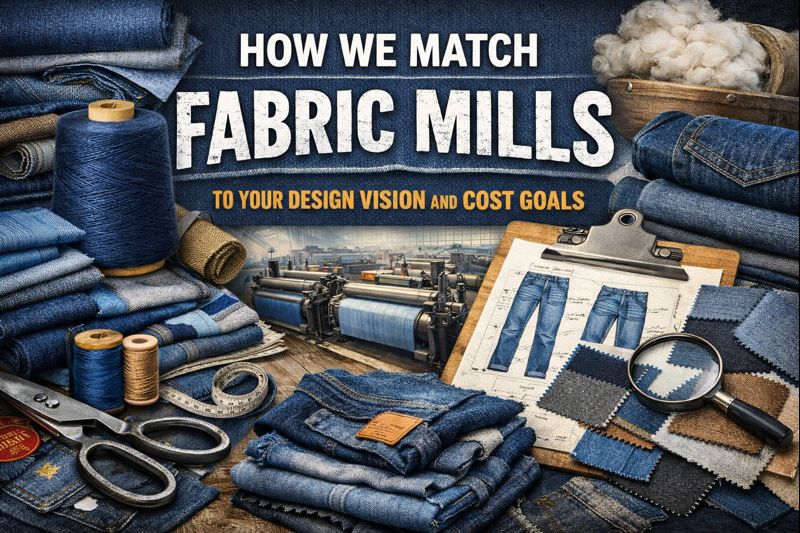
Imagine you have a bold design idea but worry about cost and quality. You want your product to stand out, but you also need to stay on budget. When you start fabric sourcing, you look for mills that understand your design and can offer the right price. Material choice shapes comfort, while sustainability and traceability build trust with your customers. The right supplier helps you turn your vision into a successful product.
Key Takeaways
Choose fabric suppliers that align with your design vision to enhance brand identity and customer loyalty.
Set a clear budget early in the sourcing process to avoid unexpected costs and make informed supplier choices.
Evaluate fabric samples thoroughly to ensure quality and performance before finalizing your supplier.
Build strong relationships with suppliers to improve service, negotiate better prices, and ensure consistent quality.
Prioritize essential features in your fabric sourcing to balance quality and cost effectively.
Why Mill Selection Matters
Aesthetics & Brand Identity
You want your apparel to reflect your brand’s unique style. The right fabric suppliers help you achieve the look and feel that sets your garment apart. When you choose mills that understand your design vision, you create products that connect with your customers. Fabric sourcing shapes the texture, color, and drape of your collection. If you select suppliers who specialize in your desired materials, you strengthen your brand identity and increase customer loyalty.
Fashion brands often face challenges when working with fabric suppliers. The table below highlights common issues:
Challenge Type | Description |
|---|---|
Fit, Sizing, and Return Risk | Variability in size interpretation and grading can lead to increased returns and negative customer feedback. |
Fabric, Trims, and Quality Variation | Changes in fabric suppliers or production methods can affect the quality and consistency of the final product. |
Trends, Seasons, and Tight Timelines | Fashion is seasonal; missing key trends can lead to poor sales performance. |
MOQs Across Sizes, Colours, and Styles | Minimum order quantities can complicate production, especially when multiple sizes and colors are involved. |
Communication, Tech Packs, and Misunderstandings | Lack of clear communication can result in production errors and unmet expectations. |
Cost & Value
You need to balance your budget with your creative goals. Fabric sourcing involves comparing prices, minimum order quantities, and value-added services from different fabric suppliers. Some mills offer competitive prices for large orders, while others specialize in small runs for new development. You should consider the total cost, including shipping, duties, and quality assurance. If you work with reliable suppliers, you avoid hidden costs and delays in manufacturing. Smart sourcing helps you maximize value without sacrificing style or comfort in your apparel.
Quality & Reliability
Quality control is essential for every garment. You rely on fabric suppliers to deliver consistent fabric quality for each production run. Mills use several metrics to ensure quality assurance, such as defect rate, coefficient of variation, and process capability index. You can request test results like dimensional stability and tensile strength to confirm durability and performance. The table below shows key metrics used by mills:
Metric | Description |
|---|---|
Defect Rate | Measures the frequency of defects in textile products, calculated as (Number of Defects / Total Inspected Units) × 100. |
Coefficient of Variation (CV%) | Quantifies variability in textile parameters relative to the mean, calculated as (Standard Deviation / Mean) × 100. |
Standard Deviation of Fabric Weight | Measures variability in fabric weight to ensure uniformity, calculated using individual weight measurements. |
Process Capability Index (Cp) | Assesses whether a textile process meets specification limits, calculated as (USL – LSL) / (6 × Standard Deviation). |
Dimensional stability tests show how fabrics react to washing and drying.
Tensile strength tests measure how much force a textile can handle before breaking.
You should always ask fabric suppliers about their quality control and quality assurance processes. Reliable suppliers support your development and manufacturing goals by delivering consistent results. Strong partnerships with mills help you produce apparel that meets customer expectations and reduces risk in garment production.
Clarify Design Vision & Cost
Define Aesthetic Goals
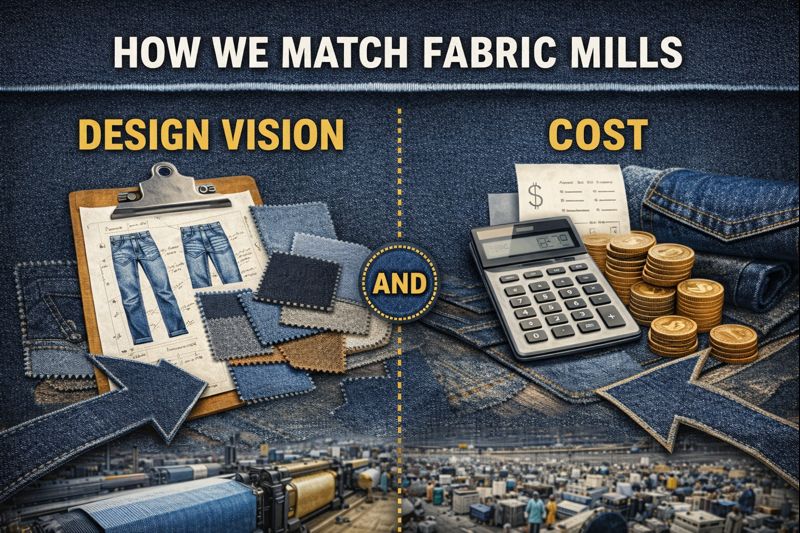
You start by shaping your design intent. Think about the look, feel, and message you want your product to share. Lock in your scenario and functional requirements first. Ask yourself: Where will people wear this garment? What should it do for them? Next, focus on style and material selection. Choose colors, patterns, and textures that match your brand. Sampling brings your vision to life. First samples test if your design works with the chosen fabric, construction, and fit. You can adjust details like graphics or pocket placement to refine the garment. This step helps you see if your ideas translate well into a real product.
Tip: Use samples to check if your design matches your expectations before moving forward.
Set Budget Parameters
You need to set clear budget limits early in the apparel product development process. Clarify your budget and core standards before you start fabric selection. List all costs, including materials, trims, and production. Remember to include shipping and quality testing. A clear budget helps you avoid surprises later. You can compare suppliers and choose options that fit your price range. When you know your limits, you make smarter choices and keep your project on track.
Prioritize Needs vs. Wants
You must decide what matters most for your design. Make a list of must-haves and nice-to-haves. For example, you may need a certain level of durability, but you might only want a special finish or rare color. Factory alignment is important here. Both you and your production team should agree on what features are essential before bulk production begins. This step reduces confusion and helps you stay focused on your goals. When you prioritize, you balance creativity with cost and ensure your final product meets your standards.
Fabric Sourcing Steps
Identify & Shortlist Suppliers
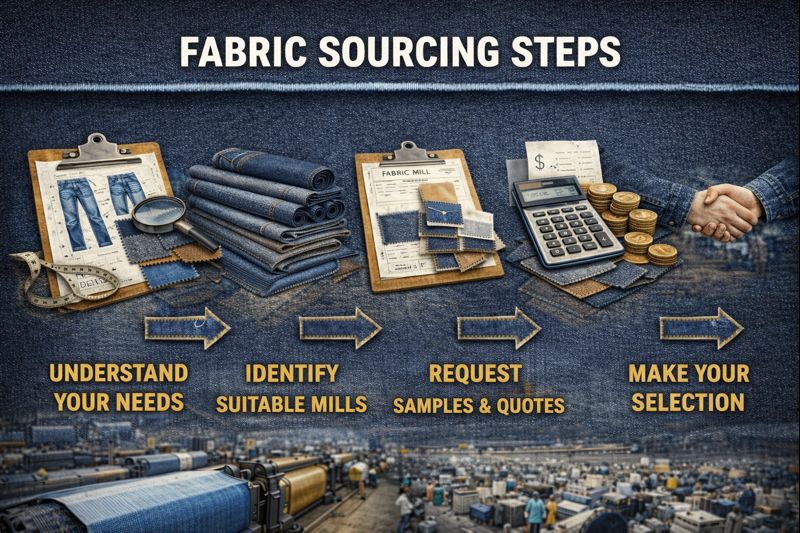
You start fabric sourcing by understanding the basics of fabric and your sourcing strategy. You need to know what your apparel requires in terms of look, feel, and function. Next, you define your budget and decide what type of supplier fits your needs. There are several types of suppliers you can choose from:
Mills: These produce fabric directly from raw materials. You use mills when you need large volumes or custom development for your garment.
Converters: These buy unfinished fabric and finish it with dyeing or printing. You choose converters for smaller runs or special finishes.
Jobbers: These sell leftover or overstock fabric. You use jobbers for limited editions or when you want to save on costs.
Sourcing Agents: These help you find and manage suppliers. You work with agents when you need expert support or want to source fabric from different regions.
You should match the supplier type to your project’s volume and customization needs. For example, if you plan a large apparel collection, you may work with mills. If you want to test a new style, you might use jobbers or converters.
When you shortlist suppliers, you look at several criteria. The table below shows what matters most:
Criteria | Description |
|---|---|
Sustainability | Choose suppliers that offer sustainable fabrics and practices. This matters more to consumers each year. |
Quality Testing | Ask for lab tests like shrinkage, colorfastness, and tensile strength to check fabric quality. |
Supplier Types | Understand what each supplier offers and how they fit your sourcing strategy. |
Business Terms | Negotiate minimum order quantities and lead times that match your production schedule. |
Certifications | Look for certifications such as GOTS, OEKO-TEX, and bluesign to confirm ethical and eco-friendly practices. |
Note: The market for sustainable fabrics grows every year. Over half of global consumers now pay more for sustainable products.
Match Capabilities & Style
You need to match each supplier’s capabilities and style to your design vision. Start by identifying the type of garment you want to create. For example, you may need blank shirts for printing or custom pieces for a new collection. Search for reliable suppliers using online directories, trade shows, or industry events. You can filter your options by location, production capacity, and minimum order quantities.
The table below outlines the steps you can follow:
Step | Description |
|---|---|
1 | Identify the type of products you need, such as blank shirts or custom garments. |
2 | Search for reliable manufacturers through online platforms or industry events. |
3 | Filter suppliers by location, production capabilities, and order size. |
4 | Meet suppliers at trade shows or request material samples to check quality and style. |
You should always compare the supplier’s style offerings with your design requirements. This ensures your apparel stands out and meets your brand’s standards. You also want to check if the supplier can handle your development and manufacturing needs.
Evaluate Samples & Certifications
You must evaluate fabric samples before making a final decision. Request samples from your shortlisted suppliers and test them for quality and performance. Common tests include:
Tensile strength test: Measures how much force the fabric can handle before breaking.
Tear resistance test: Checks how the fabric behaves when a rip starts.
Abrasion and pilling resistance: Shows how well the fabric resists surface wear.
Colorfastness testing: Assesses how dyes hold up to washing and light.
Shrinkage and dimensional stability: Checks if the fabric keeps its shape after washing.
Flammability and heat resistance: Tests how the fabric reacts to heat or flame.
Moisture management and absorbency: Measures how well the fabric wicks sweat and absorbs water.
You should also check for certifications. Certifications like GOTS, OEKO-TEX, and bluesign show that the supplier uses sustainable materials and follows ethical practices. These certifications help you ensure traceability and transparency in your supply chain. Many brands now use digital tools, such as QR codes or RFID tags, to track materials from the mill to the finished garment.
Tip: Always ask for certificates and test reports before you commit to a supplier. This protects your brand and supports responsible sourcing.
You can use these steps to build a strong sourcing fabric process. You will find suppliers who meet your design, cost, and sustainability goals. This approach supports your apparel development and manufacturing from start to finish.
Negotiate & Build Partnerships
Terms, Minimums & Lead Times
You need to set clear terms when you work with fabric mills for your apparel projects. Start by discussing minimum order quantities, payment schedules, and lead times. Mills often have set minimums for each garment style or color. You should ask about production timelines and sample delivery dates. This helps you plan your development and manufacturing process. When you clarify these details early, you avoid delays and unexpected costs in your fabric sourcing journey.
Price Negotiation
You can secure better prices for your apparel by using smart negotiation strategies. Here are some effective approaches:
Research current market rates for similar fabrics to set a fair baseline.
Discuss payment terms, such as deposits and payment schedules, to improve cash flow.
Build strong supplier relationships to access loyalty discounts and better deals.
Explore bulk discounts, volume commitments, or early payment incentives.
Aim for win-win outcomes that support both your brand and the mill.
These steps help you control costs and keep your garment production on budget. Costing accuracy and negotiation savings are key performance indicators that show how well you manage expenses.
Relationship Building
Long-term collaboration with mills brings many benefits to your apparel business. When you invest in sustainable partnerships, you help spread the cost of sustainable materials across the value chain. This keeps your products affordable and supports ethical practices in garment manufacturing. Early collaboration with mills also helps you solve challenges in scaling up new materials, leading to cost savings and product innovation.
You can track the success of your partnerships using key performance indicators. The table below lists important KPIs for fabric sourcing:
KPI Name | Description |
|---|---|
On-Time Sample Submission Rate | Frequency of on-time sample submissions. |
Order Conversion Rate | Success rate of turning samples into orders. |
Costing Accuracy | Accuracy of actual costs versus initial quotes. |
Production On-Time Delivery | Effectiveness in meeting production and shipping schedules. |
Profit Margin Per Order | Profitability for each order after negotiations. |
Supplier/Vendor Performance | Supplier performance based on timeliness and quality. |
Defect Rate in Production | Percentage of defective garments produced. |
Strong partnerships with mills support your design vision, improve development, and ensure smooth manufacturing for every garment.
Tips for Balancing Quality & Cost
When to Compromise
You often face tough choices in fabric sourcing for apparel. Sometimes, you must decide between higher quality and lower cost. Lower prices can mean lower quality, so you need to find a balance that fits your brand and design goals. Minimum order quantities can also affect your decisions. If you want a rare fabric, you may need to order more than you planned, which can stretch your budget. Time is another factor. Rushing the sourcing process can lead to mistakes or poor garment quality.
Here is a table showing common trade-offs:
Trade-off Aspect | Description |
|---|---|
Quality vs. Cost | Lower prices often correlate with lower quality, so you must balance budget and fabric quality. |
Minimum Order Quantities | Higher MOQs for unique fabrics can force compromises for budget-constrained brands. |
Time vs. Quality | Sourcing quickly can risk garment quality; avoid sacrificing quality for speed. |
You should weigh these factors carefully during development. If you need to compromise, focus on the features that matter most for your apparel. For example, you might choose a simpler finish to keep costs down but never sacrifice the durability of your garment.
Tip: Always prioritize the essential qualities that support your brand and product performance.
Leveraging Supplier Expertise
You can improve your garment outcomes by working closely with suppliers. Building strong relationships gives you access to better service, such as priority on rush orders and extra support with quality control. Many suppliers offer advice on fabric sourcing and can help you select materials that fit your design and manufacturing needs.
Consider these best practices:
Build long-term partnerships with reliable mills.
Use digital sourcing platforms to compare suppliers and access virtual swatch libraries.
Attend industry events to see materials firsthand and keep up with textile innovations.
Seek out suppliers who specialize in small brands or flexible production setups.
Establish rapport with family-run mills for custom projects.
You can also benefit from understanding the global textile landscape. Asian suppliers often offer lower prices but require larger orders. European manufacturers focus on smaller batches and higher quality, which can suit brands that value craftsmanship. By leveraging supplier expertise, you support your development and ensure your apparel meets high standards.
Note: Strong supplier relationships help you solve sourcing challenges and create garments that stand out in the market.
You can achieve your design vision and cost goals by following a clear process for fabric sourcing. This approach helps you create apparel that stands out and meets your standards. Strategic, sustainable, and traceable sourcing leads to greater product success because:
You build trust with consumers by sharing authentic sustainability stories.
You strengthen supplier relationships, which supports long-term garment quality.
You ensure transparency and compliance, protecting your apparel brand.
Start your sourcing journey with confidence, knowing you have the tools to make your next garment a success.
FAQ
How do you choose the right fabric mill for my project?
You look at your design goals, budget, and order size. You compare mills based on their specialties, certifications, and ability to meet your timeline. You request samples to check quality.
What certifications should I ask for when sourcing fabric?
Certification | Purpose |
|---|---|
GOTS | Organic standards |
OEKO-TEX | Safety from chemicals |
bluesign | Sustainable processes |
You ask for these to ensure ethical and eco-friendly sourcing.
Can I source sustainable fabrics on a tight budget?
Yes! You can find mills that offer recycled or organic fabrics at competitive prices. You compare options and negotiate minimums to fit your budget.
What is the difference between a mill and a converter?
Mill: Makes fabric from raw materials.
Converter: Buys unfinished fabric and adds color or prints.
You choose mills for custom bulk orders. You use converters for special finishes or smaller runs.