

You see how ai changes fashion by transforming pattern design and reducing fabric waste. Ai guides you toward sustainable by design choices, helping you pick greener fabrics. Ai predicts demand, so you avoid overproduction and waste. Ai shows you the environmental impact of every design, letting you select sustainable by design options. The fashion industry faces urgent pressure for sustainable by design solutions. Ai supports garment reuse and recycling, making every step sustainable by design. Ai leads you to waterless dyeing and eco-friendly fibers, keeping fashion sustainable by design.
Ai helps minimize waste in pattern-making for fashion.
Ai predicts fashion demand to cut overproduction.
Ai evaluates fashion’s environmental impact for sustainable by design.
Key Takeaways
AI helps reduce fabric waste by optimizing pattern designs, allowing you to create more efficient layouts.
Using AI for demand forecasting can cut overproduction by up to 45%, minimizing unsold inventory.
AI technologies enable virtual prototyping, saving up to 80% of fabric waste compared to traditional methods.
Implementing AI in fashion supports circular economy practices, promoting recycling and sustainable material use.
Focus on sustainability by integrating AI into your workflow, tracking key metrics to improve efficiency and reduce waste.
AI and Sustainable by Design in Fashion
How AI Enables Sustainable Pattern Design
You see how ai changes the way you approach sustainable fashion design. Ai processes large datasets and identifies trends quickly. You use generative algorithms to create many design variations in minutes. Automation of technical tasks like pattern drafting saves you time and effort. Ai reduces waste by limiting the need for physical prototypes. You rely on predictive production to avoid overstocking and cut waste. Ai generates zero-waste patterns and enables on-demand production, so you only make what you need. You collaborate with ai to prioritize eco-conscious creativity and select sustainable fabrics for your designs. Smart algorithms analyze patterns and help you minimize fabric waste. Ai tools streamline inventory management and identify reusable fabric remnants for repurposing. Advanced algorithms analyze vast datasets for pattern creation, and tools like Midjourney and DALL-E generate unique patterns quickly. Ai maximizes raw material use and supports a sustainable approach to textile manufacturing. You see how ai helps you build circular fashion systems and improve supply chain sustainability.
Tip: You can use ai to analyze millions of pattern layouts in seconds. This helps you select the most efficient arrangement and minimize waste.
Zero-Waste Cutting and Virtual Prototyping
You notice a big shift from traditional methods to ai-driven processes in fashion. Ai-powered software optimizes cutting layouts and reduces fabric scraps during pattern-making. Ai improves recycling efforts by using sorting systems that identify and separate textiles, which promotes circular fashion and supports a circular economy. You use ai to generate zero-waste outfits and reduce unsold inventory. Ai-driven systems enable on-demand production, so you only produce garments after an order is placed. This approach eliminates overproduction waste and boosts sustainability.
Method | |
|---|---|
Traditional Methods | 10–20% |
AI-Powered Solutions | 5–15% |
You see that ai tools can analyze millions of layouts and select the best one for minimal waste. This results in a reduction of waste by 5–15% compared to manual planning. Ai helps you maximize the use of sustainable fabrics and supports circular fashion practices. You build a more sustainable future for fashion by using ai to optimize patterns and reduce waste.
The Importance of Waste Reduction

Environmental Impact of Fabric Waste
You play a key role in shaping the future of fashion by focusing on waste reduction. When you look at the environmental impact of fabric waste, you see how much the fashion industry affects the planet. Every year, fashion brands generate 92 million tonnes of textile waste. In the United States alone, 11 million tons of textiles end up as waste. Less than 15% of these textiles get recycled, which means most discarded clothing goes to landfills. The environmental impact grows when you consider that textile production uses 93 billion cubic meters of water each year. The fashion industry also contributes 3-8% of global greenhouse gas emissions. You notice that fast fashion creates over 15 kilograms of textile waste per person in Europe, with 85% of it being discarded clothing. Synthetic materials shed microplastics and retain harmful chemicals, which increases the environmental impact. When you focus on reducing waste, you help lower carbon emissions. The fashion industry produces about 10% of global carbon emissions, so reducing waste can make a big impact. You see that switching to renewable energy sources in production can further reduce the environmental impact.
Textile waste fills landfills and pollutes water.
Synthetic fabrics shed microplastics, harming the environment.
Recycling rates remain low, increasing the environmental impact.
Reducing waste helps lower carbon emissions and supports sustainability.
Description | Volume/Percentage |
|---|---|
Annual textile waste globally | 92 million tonnes |
Percentage of clothing discarded | 85% |
Textile waste generated in the US | 11 million tons |
Percentage of textiles recycled | Less than 15% |
Water consumption by textile production | 93 billion cubic meters annually |
Contribution to global greenhouse gas emissions | 3-8% |
Economic Benefits for Brands
You see that waste reduction does not only help the environment. It also brings economic benefits to fashion brands. When you use AI-driven strategies to reduce waste, you lower operational costs and optimize resource use. You improve inventory management by predicting demand more accurately, which reduces excess stock and production waste. Real-time data analytics help you streamline supply chain operations, cutting delays and costs. You create new revenue streams by adopting circular fashion models, recycling, and sustainable practices. Brands report cost savings after adopting AI for fabric waste reduction. You produce fewer physical samples because AI creates digital prototypes, which reduces fabric waste. Better demand forecasting means you avoid overproduction and unsold inventory. You respond to trends faster, which minimizes resource waste and increases speed to market. AI forecasting can be up to 50% more accurate than traditional methods, helping you reduce waste and improve sustainability.
Economic Benefit | Description |
|---|---|
Reduced Operational Costs | AI-driven strategies help in minimizing waste and optimizing resource use, leading to lower costs. |
Improved Inventory Management | AI accurately predicts demand, enhancing inventory control and reducing excess stock. |
Enhanced Supply Chain Efficiency | Real-time data analytics improve visibility and streamline operations, reducing delays and costs. |
New Revenue Streams | Circular fashion models create opportunities for income through recycling and sustainable practices. |
Note: When you focus on waste reduction, you support both environmental sustainability and profitability. You help build a more sustainable fashion industry by reducing waste and improving efficiency.
AI Technologies Driving Sustainable Fashion Design
Generative Algorithms and Machine Learning
You use ai technologies to create sustainable fashion designs that support a circular economy. Generative algorithms help you design patterns that optimize fabric usage and minimize waste. Machine learning predicts fashion trends and helps you select eco-friendly materials. You rely on ai to analyze historical sales data and trends, which improves demand forecasting and reduces overproduction. Generative ai applications let you experiment with circular design concepts and incorporate recycled materials. You see how ai technologies identify efficient fabric usage during production and support circular fashion systems.
ai technologies for sustainable fashion design:
Machine learning for trend prediction
Generative design for eco-patterns
3D simulation for virtual try-ons
Computer vision for material analysis
ai helps you:
Optimize fabric usage
Minimize waste
Incorporate eco-friendly materials
Predict demand accurately
Reduce overproduction and waste
Predictive Analytics for Demand and Material Use
You use predictive analytics to align supply with demand and avoid excess production. ai technologies analyze consumer data and help you respond to the growing interest in sustainable materials. Accurate trend prediction can reduce overproduction by up to 30%. You optimize inventory and reduce waste by analyzing historical sales data. Predictive analytics supports circular economy practices by promoting responsible sourcing strategies and optimizing material selection. You see how ai technologies improve demand forecasting and help you select materials that support environmental sustainability.
Note: Predictive analytics lets you identify sustainable materials and respond quickly to environmental trends in fashion.
3D Simulation and Virtual Sampling
You use 3D simulation and virtual sampling to reduce physical fabric waste during the design process. ai technologies let you create digital prototypes and experiment with green materials in a virtual setting. You save up to 80% of fabric waste compared to traditional sampling methods. Digital prototypes eliminate the carbon footprint from shipping physical samples and support circular economy goals. You see how ai technologies help you adopt sustainable materials and minimize environmental impact. 3D simulation supports circular fashion by allowing you to test new materials and designs without wasting resources.
Method | Fabric Waste Reduction |
|---|---|
Traditional Sampling | Up to 25% wasted |
3D Simulation | Up to 80% saved |
You build a more sustainable future for fashion by using ai technologies to optimize material selection, reduce waste, and support a circular economy.
AI-Driven Pattern Optimization Process
Analyzing and Optimizing Fabric Layouts
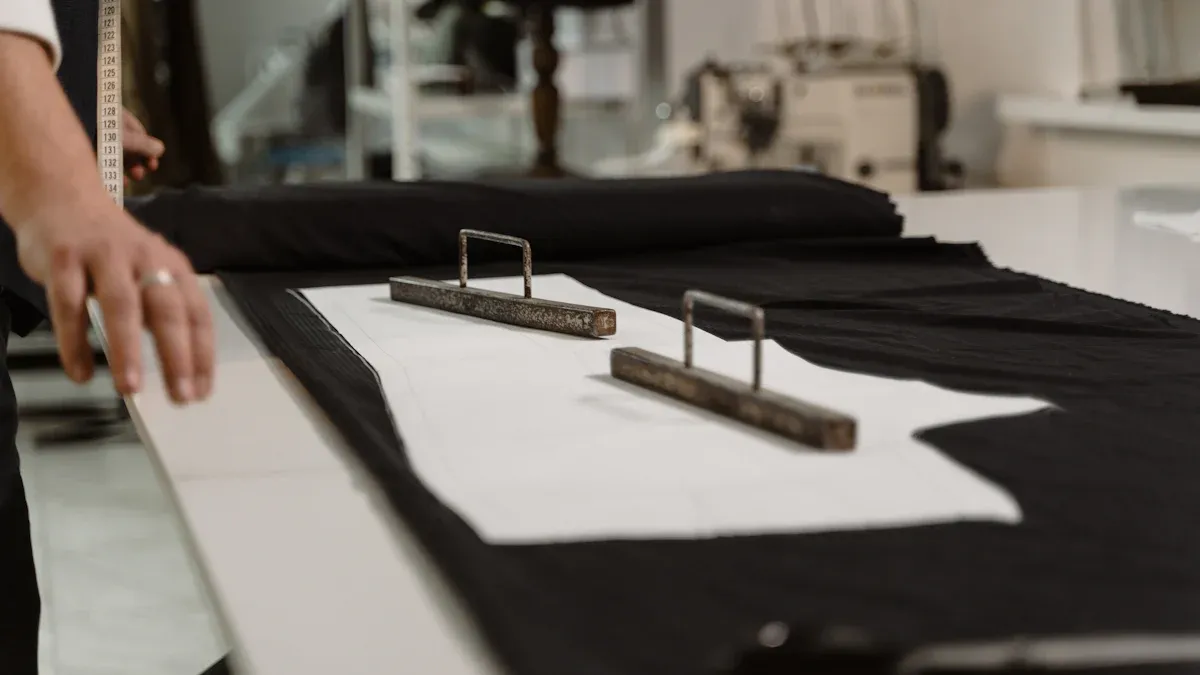
You use ai to transform how you approach pattern optimization in fashion. Ai systems analyze fabric layouts by processing historical data and applying machine learning techniques. Neural networks learn from previous cutting jobs and predict efficient layouts for new designs. Genetic algorithms evolve layouts by selecting and reproducing the best patterns, which helps you minimize waste. Simulated Annealing explores layout changes and finds optimal patterns while reducing waste. You rely on ai-driven solutions to optimize fabric usage, which is crucial for sustainable practices in fashion.
Ai acts as a powerful ally in tackling the global sustainability crisis. You achieve zero-waste layouts and enhance supply chain efficiency, which reduces carbon emissions. Catalyst AI demonstrates this process by analyzing fabric layout and construction details. You see a 3% increase in fabric efficiency while maintaining the aesthetics of your designs. Ai pattern-making systems help you maximize raw material use and support sustainable practices. You use pattern nesting to arrange pattern pieces tightly, which reduces fabric waste and supports sustainable fashion.
Neural networks predict efficient layouts.
Genetic algorithms evolve layouts to minimize waste.
Simulated Annealing finds optimal patterns.
Ai pattern-making systems optimize fabric usage for sustainable practices.
Predicting Demand and Reducing Overproduction
You use ai to predict demand and reduce overproduction in fashion manufacturing. Ai learns from historical sales data and identifies purchasing patterns. You monitor real-time market trends and track fashion influencers to spot emerging styles. Ai uses weather and seasonal data to forecast demand for seasonal clothing. You recognize geographical preferences and distribute inventory more effectively. Ai analyzes consumer behavior and browsing habits, which helps you tailor your offerings.
Ai enhances Just-in-Time manufacturing by forecasting demand patterns in real time. You produce clothing only as needed, which reduces storage costs, material waste, and the risk of overproduction. You rely on ai-driven solutions to detect demand patterns across product lines and regions. Time series forecasting models capture seasonality and timing for specific SKUs. Natural Language Processing interprets consumer reviews and social media to understand trends before they impact sales. Computer vision analyzes product images and social media to identify trending colors, cuts, and textures. Demand sensing engines identify short-term demand signals from store data or weather changes. Data integration platforms combine fragmented data sources into a unified forecasting pipeline. Cloud infrastructure provides scalability and real-time collaboration for immediate data access. Recommendation engines suggest strategies for product assortment, restocking, and promotions.
Method | Description |
|---|---|
Machine Learning Algorithms | Detect demand patterns across product lines and regions, learning and improving each season. |
Time Series Forecasting Models | Capture seasonality and timing for specific SKUs using tools like ARIMA, LSTM, Prophet. |
Natural Language Processing (NLP) | Interpret consumer reviews and social media to understand trends before they impact sales. |
Computer Vision | Analyze product images and social media to identify trending colors, cuts, and textures. |
Demand Sensing Engines | Identify short-term demand signals from store data or weather changes. |
Data Integration Platforms | Combine fragmented data sources into a unified forecasting pipeline. |
Cloud Infrastructure | Provide scalability and real-time collaboration for immediate data access. |
Recommendation Engines | Suggest strategies for product assortment, restocking, and promotions. |
You see real-world examples of brands using ai to achieve significant waste reduction. Walmart uses ai to forecast demand accurately, which optimizes inventory levels and reduces waste. Amazon employs ai-driven systems to maintain optimal stock levels, ensuring timely delivery and minimizing stockouts. Toyota implements ai-powered predictive analytics to reduce downtime and improve efficiency, which leads to cost savings.
Step-by-Step Workflow for Sustainable Practices
You adopt a step-by-step workflow to integrate ai into sustainable practices for fashion. You start with the data you already have and identify where ai can help. You define guardrails for ai to ensure sustainable practices remain a priority. You pilot demand forecasting against sustainability KPIs and measure the impact.
Companies like GreenNest have tackled these challenges head-on, achieving remarkable results. By rethinking their operations and adopting advanced strategies to predict waste patterns, optimize resource use, and integrate circular economy models, GreenNest reduced waste by 30% while significantly improving operational efficiency.
You track key metrics to reduce emissions and improve sustainable practices. You monitor token usage per API call, model type and version, cloud region, and frequency of queries. You design efficient ai workflows to reduce emissions and operational costs. You use ai to optimize pattern layouts, predict demand, and integrate circular economy models into your supply chain.
Define guardrails for ai to maintain sustainable practices.
Pilot demand forecasting and measure sustainability KPIs.
Track key metrics for emissions and operational efficiency.
Design efficient ai workflows to reduce waste and costs.
You see that ai-driven solutions help you build a more sustainable fashion industry. You optimize pattern layouts, predict demand, and integrate sustainable practices into every step of your workflow. You achieve significant waste reduction and support a circular economy in fashion.
Benefits and Challenges of AI for Waste Reduction
Sustainability and Efficiency Gains
You see major improvements in sustainability and efficiency when you use ai to reduce waste in fashion. Ai helps you cut overproduction by 45%, which means fewer unused garments and less waste in landfills. You sort plastics and textiles with ai, reaching accuracy rates above 95%. Ai gives you real-time tracking of environmental impact across thousands of suppliers, so you can make better decisions for circular fashion systems.
Sustainability and Efficiency Gains | Description |
|---|---|
Reduction in Overproduction | 45% reduction in overproduction in fashion supply chains optimized by ai. |
Improved Recycling Accuracy | Sorting plastics with ai achieves accuracy rates exceeding 95%. |
Enhanced Supply Chain Transparency | Real-time tracking of environmental impact across 1000+ suppliers. |
Dr. Emma Williams from Stanford University says ai optimization leads to a 30% decrease in logistics-related carbon emissions. Michael Roberts at Zara highlights how ai revolutionizes supply chain monitoring, letting you track environmental impact instantly. Ai supports circular fashion by helping you identify recyclable materials and reduce landfill waste. You use ai to audit labor practices and ensure safety and fairness, which boosts sustainability in your brand.
Implementation Barriers and Ethical Considerations
You face several challenges when you adopt ai for waste reduction in fashion. Incomplete and inconsistent data beyond Tier 1 suppliers can cause unreliable ai outcomes. You may struggle to connect ai with existing systems, which leads to fractured visibility and operational delays. The “black box” problem makes it hard for executives to trust ai because they cannot see how decisions are made.
Tip: You can overcome these barriers by training your team to understand ai and by setting clear ethical guidelines.
You need to address ethical considerations when you use ai in fashion. You should build diverse teams and create strong ethical governance for responsible ai use. You must train your staff to understand ai’s capabilities and limits. Radical transparency helps you explain how you use ai and handle consumer data, which builds trust. You make sustainability a core part of your ai strategy to improve environmental and ethical outcomes.
Ethical Consideration | Description |
|---|---|
Ethical AI Governance | Establish diverse teams and clear ethical guidelines for responsible ai use. |
Workforce AI Fluency | Train staff to understand ai’s capabilities and limitations. |
Radical Transparency | Provide clear explanations of ai use and data practices to build consumer trust. |
Integrating Sustainability as a Core Driver | Make sustainability a fundamental aspect of ai strategy to enhance environmental and ethical outcomes. |
Ai tools like Stylumia and Heuritech help you align your products with actual consumer demand, which minimizes excess production and waste. You see that integrating ai into design and production is essential for true sustainability in fashion. Ai supports circular fashion by sorting textile waste and identifying recyclable materials, which reduces environmental impact and supports a circular economy.
You see how ai transforms fashion by optimizing supply chains and reducing waste. You start with your existing data and embed sustainability filters into ai models. You pilot demand forecasting and use ai insights to drive supplier accountability. Brands using ai achieve 85% forecast accuracy, a 50% reduction in excess inventory, and a 30% decrease in storage costs.
You optimize production, minimize waste, and support circular fashion. You prepare for a future where ai helps you create eco-friendly materials and extend product lifecycles.
Map your data streams to identify where ai can reduce waste.
Define sustainability guardrails before scaling ai in fashion.
Use ai to forecast demand and measure waste reduction.
Turn ai insights into supplier dialogue for lasting change.
FAQ
How does AI help you reduce fabric waste in fashion design?
AI analyzes your pattern layouts and suggests the most efficient arrangement. You use these insights to cut fabric waste and improve sustainability in your designs.
Can you use AI for small fashion brands?
You can use AI tools even if you run a small brand. Many platforms offer affordable solutions that help you optimize patterns and predict demand.
What skills do you need to work with AI in fashion?
You need basic computer skills and a willingness to learn new technology. Many AI platforms have user-friendly interfaces, so you can start quickly.
Does AI support eco-friendly material choices?
AI recommends sustainable fabrics by analyzing environmental impact data. You use these suggestions to select greener materials for your collections.