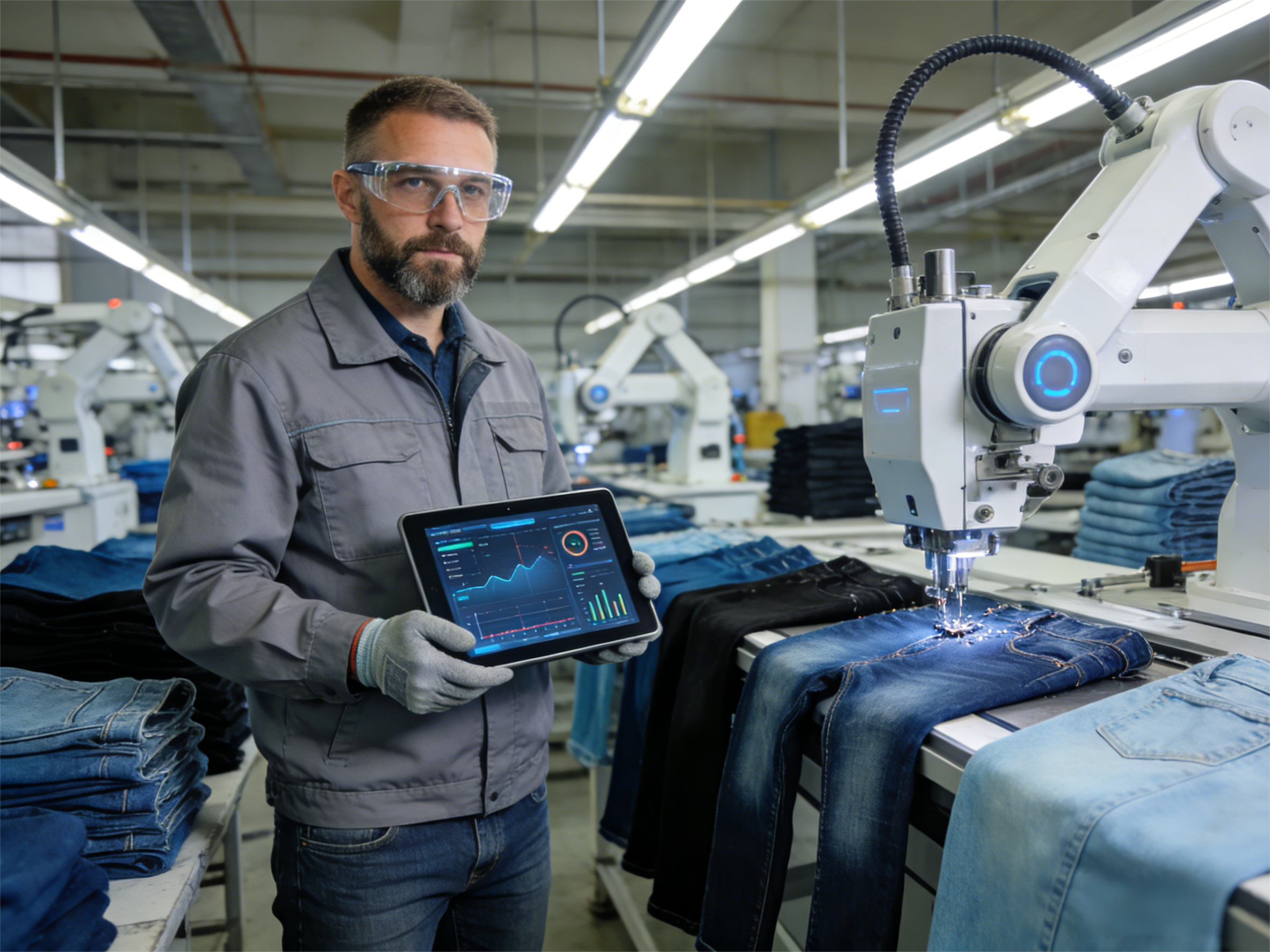
AI help in design has changed how you see denim jeans. AI predicts trends, personalizes styles, and powers on-demand production. You benefit from smarter inventory management and automated manufacturing. Companies like Levi Strauss use AI to forecast demand and improve decisions. H&M uses AI to design collections with less waste. The results speak for themselves:
Impact Area | Evidence |
|---|---|
Efficiency | AI helps garment manufacturers cut costs by up to 50% through smarter inventory and production planning. |
Quality | AI optimizes fabric usage, reducing leftover waste and enhancing the quality of production. |
Customer Experience | Generative AI-powered virtual try-on technologies enhance online personalization and engagement. |
AI drives innovation, boosts quality, and gives you a better experience.
Key Takeaways
AI predicts denim trends by analyzing social media and sales data, helping brands stay ahead of the curve.
Hyper-personalization allows brands to create jeans tailored to individual styles and body types, enhancing customer satisfaction.
Virtual prototyping speeds up the design process, reduces waste, and improves the accuracy of denim products.
AI-driven inventory management optimizes supply chains, reducing excess stock and ensuring timely delivery of popular styles.
Sustainable practices in AI manufacturing minimize water usage and chemical waste, supporting eco-friendly fashion choices.
AI Help in Design for Denim
Trend Prediction Tools
You see trends change quickly in the world of denim. AI help in design gives you the power to spot these shifts before they hit the mainstream. Platforms like Trend Engine+, Adobe Sensei, Heuritech, and Match AI scan millions of images, social posts, and sales data. They find patterns that humans might miss. For example, Heuritech’s platform detected a 217% rise in denim with visible silver duct tape repairs. This insight led a major US brand to adjust its production and stay ahead of the curve.
You can compare different forecasting methods to understand how ai help in design works. The table below shows how AI, street style scouts, and hybrid approaches perform in predicting denim trends:
Forecasting Method | Avg. Lead Time (Days Before Peak Adoption) | Precision Rate | Cultural Context Captured | False Positive Rate |
|---|---|---|---|---|
AI Trend Predictors (Top Tier Platforms) | 12.4 | 68% | Low–Moderate | 31% |
Street Style Scouts (Trained Ethnographic Teams) | 28.7 | 89% | High | 11% |
Hybrid Approach (AI + Scout Validation) | 21.3 | 93% | High | 7% |
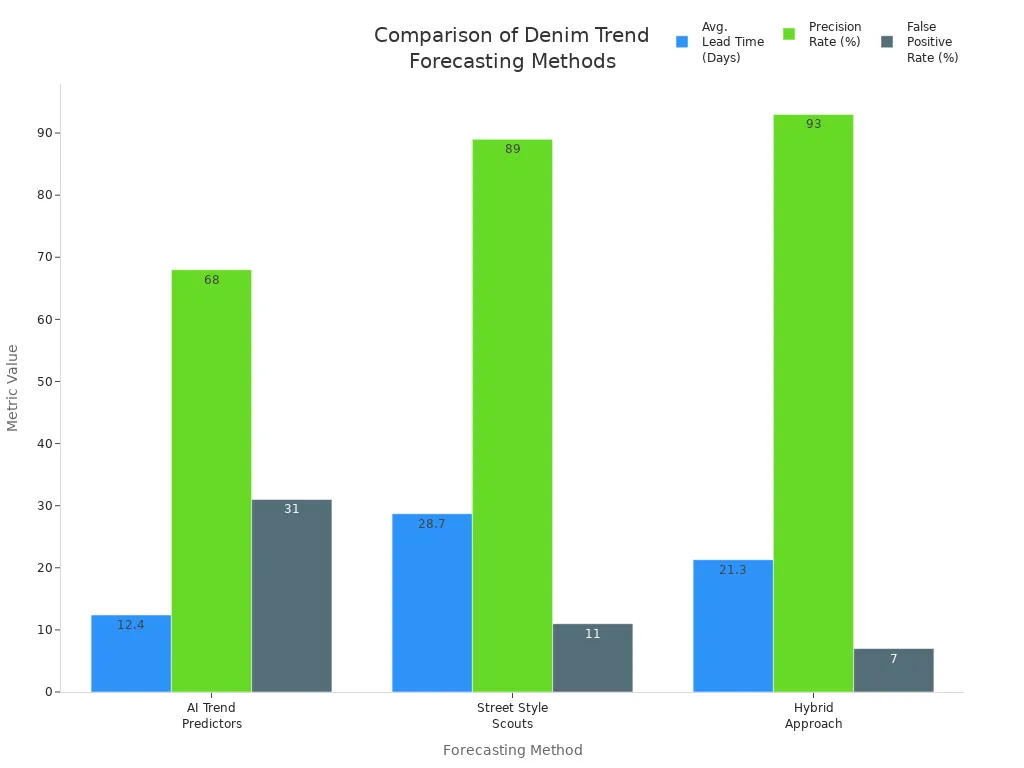
You get faster insights with AI, but hybrid methods offer the best accuracy. AI help in design also means you can track social media trends, analyze customer behavior, and get actionable insights for production planning. Platforms like Trendalytics and Couture.ai lead the way in ai-powered fashion design.
Hyper-Personalisation in Fashion
Hyper-personalisation in fashion changes how you shop and wear denim. AI help in design lets brands create jeans that match your unique style, body type, and even your region’s preferences. American Eagle uses AI to boost its marketing and deliver hyper-personalisation in fashion at scale. The company set up an AI marketing council to make sure technology fits its brand values.
Levi Strauss & Co. uses data analytics to spot trends like the comeback of baggy jeans. By analyzing data from over 50,000 distribution points, Levi’s adapts its products for different markets. This approach to hyper-personalisation in fashion means you get jeans that fit your taste, whether you live in New York or Tokyo. AI help in design makes it possible to offer hyper-personalisation in fashion for every customer, not just a select few.
Hyper-personalisation in fashion also helps brands reduce waste. When you get exactly what you want, companies avoid overproduction. This makes the whole process more sustainable. Hyper-personalisation in fashion is not just a trend—it is the future of ai-powered fashion design.
Virtual Prototyping and Sampling
You no longer need to wait for physical samples to see how a new pair of jeans will look or fit. AI help in design brings virtual prototyping and sampling to the denim industry. Brands use advanced 3D design tools powered by AI to create digital garments that move and drape like real fabric. This technology lets you and designers review and refine styles quickly.
Virtual prototyping offers big benefits. You save time because you do not need to ship samples back and forth. You cut down on fabric waste, which helps the environment. You also get more accurate designs because AI can simulate how denim will behave in real life.
Companies like Les Mains Bleues use AI-driven virtual prototyping to boost creativity and personalization. Tools such as Midjourney, DALL·E, and Adobe Firefly let you explore many design options in minutes. McKinsey & Company predicts that generative AI could add up to $275 billion in operating profits to the fashion sector by 2028. AI help in design makes the process faster, smarter, and more sustainable.
Tip: If you want to see the future of denim, look for brands that use virtual prototyping. You will notice better fit, more choices, and less waste.
On-Demand and Personalized Production
Data-Driven Customization
You want jeans that fit your style and body perfectly. AI makes this possible through on-demand and personalized production. Smart factories now use robotics and AI systems to deliver custom sizing and fit for every customer. You see fewer defects and faster turnaround times because automated sewing and cutting machines work with precision. This means you get your denim faster and with better quality.
AI-driven analytics play a big role in this process. Brands use analytics to understand what you like, from color to fit and size optimization. They collect data from your shopping habits and feedback. This helps them design jeans that match your preferences. You benefit from personalization that feels unique to you, not just a generic product.
When brands use AI for data-driven customization, they reduce lead times and waste. You see more choices and better alignment with your needs. Brands also improve customer satisfaction because they listen to what you want. AI-powered production means you get jeans that fit your life, whether you want a classic look or something bold.
Inventory and Supply Chain Optimization
You may not see what happens behind the scenes, but AI transforms how denim reaches you. On-demand and personalized production relies on smart inventory and supply chain management. AI detects demand shifts in real time. When a trend changes, AI enables proactive inventory redistribution so you always find the styles you want.
AI forecasting reduces excess inventory by about 40%. It improves accuracy by around 50%. You get the right products in the right place, which means fewer markdowns and less waste. Brands use analytics to run “What-If” simulations. These help them prepare for disruptions, like port congestion or supply shortages.
AI optimizes distribution, so your favorite jeans arrive at stores before you even know you want them.
Footwear brands use IoT-enabled tracking tags to monitor materials during transit. This technology ensures quality and safety.
Global luxury brands combine supplier data with satellite imaging. They identify risks like unapproved subcontracting or deforestation.
Logistics teams use live dashboards to adjust shipments quickly. You benefit from faster delivery and better availability.
AI-driven inventory management impacts both waste reduction and profitability. The table below shows how AI supports denim production:
Key Benefit | Description |
|---|---|
Waste Reduction | AI helps prevent overproduction, which is environmentally damaging. |
Profitability Enhancement | Optimized inventory levels lead to reduced costs and better alignment with market demand. |
Demand Prediction | AI analyzes historical data to accurately forecast inventory needs for each SKU, size, and color. |
You see the results in the store and online. There is less waste, more choices, and better prices. Automated sewing and cutting, combined with analytics, make the supply chain smarter and more resilient. AI and automation work together to deliver the denim you want, when you want it.
Tip: If you want to support sustainable fashion, choose brands that use AI for inventory and supply chain optimization. You help reduce waste and protect the environment.
Sustainable and Smart Manufacturing
AI-Powered Quality Control
You see big changes in manufacturing when companies use ai-powered quality control. Cameras and sensors powered by ai scan every piece of denim as it moves through the production line. These systems use computer vision and advanced neural networks to spot defects like uneven stitching or fabric flaws. You get jeans with better quality because ai reduces the defect rate to just 1.5%. This means fewer returns and higher customer satisfaction.
You also notice that ai-powered quality control systems work faster than manual inspections. They check thousands of garments each hour. You benefit from consistent quality and fewer mistakes. Manufacturers save money because they avoid costly rework and wasted materials. Ai helps you trust the products you buy.
Ai-powered design platforms boost creativity and efficiency.
Robotics automation cuts manual labor and reduces material waste.
Automated guided vehicles and smart conveyor systems streamline workflow.
Note: When you choose brands that use ai for quality control, you support sustainable choices and better products.
Waste Reduction and Resource Efficiency
You help the planet when you support sustainable and smart manufacturing. Ai makes sustainable production possible by reducing waste and saving resources. Machine learning optimizes washing and finishing processes, so manufacturers use less water and fewer chemicals. Some factories now use waterless dyeing and recycled fiber blends to meet sustainability goals.
The table below shows how ai improves sustainable production in denim manufacturing:
Evidence Type | Description | Quantifiable Result |
|---|---|---|
Water Usage Reduction | Ai-powered washing techniques reduce water usage significantly. | |
Chemical Elimination | Ai helps in eliminating harmful chemicals from the washing process. | Complete elimination of harmful chemicals |
Precision Washing | Machine learning optimizes various washing techniques for eco-friendliness. | Enhanced efficiency in washing processes |
You also see new eco-friendly dyeing and finishing methods. Ai predicts dye uptake and coating performance, which reduces waste and energy use. Jeanologia’s laser technology cuts water use by 80% and removes toxic chemicals. DyeCoo’s CO2 dyeing eliminates water and lowers chemical use, producing vibrant denim. These methods work better than traditional manufacturing, which often wastes water and uses harmful substances.
You make a difference when you choose brands that focus on sustainability. Ai helps manufacturers create products that protect the environment and support sustainable choices.
Real-World Applications in Denim
Leading Brands and Startups
You see many brands leading the hyper-personalisation revolution in denim. Levi’s uses ai to predict trends and create jeans that match your style. The company relies on ai to analyze shopping habits and regional preferences. This approach helps Levi’s offer products that fit your needs and reduce returns and waste. PUMA and other brands involve you in the creative process by using ai tools for design input. You become part of the story, which builds loyalty and excitement.
Startups like Zelig use generative ai to lower development costs and improve virtual try-ons. These tools show you how denim fits and moves, making online shopping easier. Zelig blends open-source language models with its own software to create realistic fabric movement. You get a better sense of how jeans will look before you buy them. This technology supports the future of hyper-personalisation in fashion by making try-ons more accurate and accessible.
Innovative AI Solutions
You benefit from ai in many ways when you shop for denim. Generative ai creates marketing materials, ad copy, and social media posts that feel fresh and personal. Brands use ai to experiment with new colors, patterns, and styles. You see more choices and faster updates in collections. Digital twins and ai-generated models make marketing campaigns more immersive and engaging.
Ai-driven recommendations tailor product suggestions to your shopping habits. Amazon’s recommendation engine, powered by ai, drives about 35% of its sales. You find products that match your taste, which increases satisfaction and loyalty. Bombas uses ai to analyze abandoned carts and understand what brings you back. These solutions show the benefits of ai in the textile industry, from boosting sales to improving customer support and reducing fraud.
The future of hyper-personalisation in fashion depends on ai-powered try-ons and smart recommendations. You experience more options, better fit, and a smoother shopping journey. Brands leading the hyper-personalisation revolution use ai to deliver these benefits, shaping the next era of denim.
Challenges and Future Trends
Implementation Barriers
When you look at artificial intelligence in denim production, you see some real challenges. Robots struggle with fabric limpness because denim is soft, not rigid like metal or plastic. Sewing curves and darts needs dexterity that current technology cannot match. Grippers on robots often fail to handle soft materials, so manufacturers must invent new tools. You also face sustainability issues. Traditional denim production uses a lot of water and chemicals. Adding synthetic fibers like elastane makes recycling harder. Stretch denim brings extra hurdles for design optimization and eco-friendly manufacturing.
Challenge | Description |
|---|---|
Fabric Limpness | Robots have trouble handling soft denim fabric. |
Complex Operations | Sewing curves and darts needs skills robots do not have yet. |
Gripper Limitations | Standard grippers cannot manage soft materials like denim. |
You see that aligning design optimization with sustainability goals remains a tough task for many brands.
Workforce and Ethical Concerns
As you watch artificial intelligence and ai-driven technologies grow, you notice big changes for workers. Automation speeds up production and boosts productivity, but it can also replace jobs that require manual labor. Many people worry about job loss in factories. You must think about fairness and ethics when using artificial intelligence. The industry needs to balance design optimization, technology, and human roles. You want progress, but you also want to protect workers and communities.
Automation increases productivity and output.
Job displacement becomes a concern for labor-intensive roles.
Ethical questions arise about how artificial intelligence shapes the future of work.
You play a part in supporting brands that value both innovation and fair treatment of workers.
Evolving AI Capabilities
You see artificial intelligence and design optimization changing denim design every day. AI and data analytics help brands spot trends and create styles that match what you want. Designers use design optimization to predict trends and reduce waste. This means you get denim that fits your taste and helps the planet. Artificial intelligence also improves supply chains. You benefit from better demand forecasting, inventory optimization, and faster delivery. AI-driven technologies make operations smarter and more resilient.
Manufacturers now focus on automation and sustainable practices. They use adaptive systems and design optimization to boost efficiency and meet new regulations. You see more eco-friendly fabrics and smarter production lines. Artificial intelligence will keep evolving, bringing new ways to improve design optimization, sustainability, and productivity in the denim industry.
You see ai changing how brands design and produce denim. Ai tools predict trends, create mockups, and speed up design. You benefit from personalizing denim, better quality, and less waste. Ai supports eco-friendly practices and helps brands track fabric origins. The table below shows future trends that will shape your experience:
Aspect | Description |
|---|---|
Manufacturing Efficiency | Ai and automation reduce waste and improve quality. |
Personalization | Ai analytics help brands tailor denim to your style. |
Sustainability | Ai supports on-demand models and eco-friendly sourcing. |
Industry experts recommend using ai shopping assistants and design platforms for faster support and better products.
FAQ
How does AI predict denim fashion trends?
AI scans social media, sales data, and images. You get early alerts about new styles. This helps brands design jeans that match what you want before trends go mainstream.
Can AI help you find the perfect fit for jeans?
Yes! AI uses your measurements and style preferences. You receive recommendations for jeans that fit your body shape and taste. This makes shopping easier and more personal.
Does AI make denim production more sustainable?
AI reduces waste by optimizing fabric use and water consumption. You support eco-friendly brands when you choose jeans made with AI-driven processes.
What are the main challenges of using AI in denim manufacturing?
You face issues like robots struggling with soft fabrics and job changes for workers. Brands must balance technology with fair treatment and sustainability.