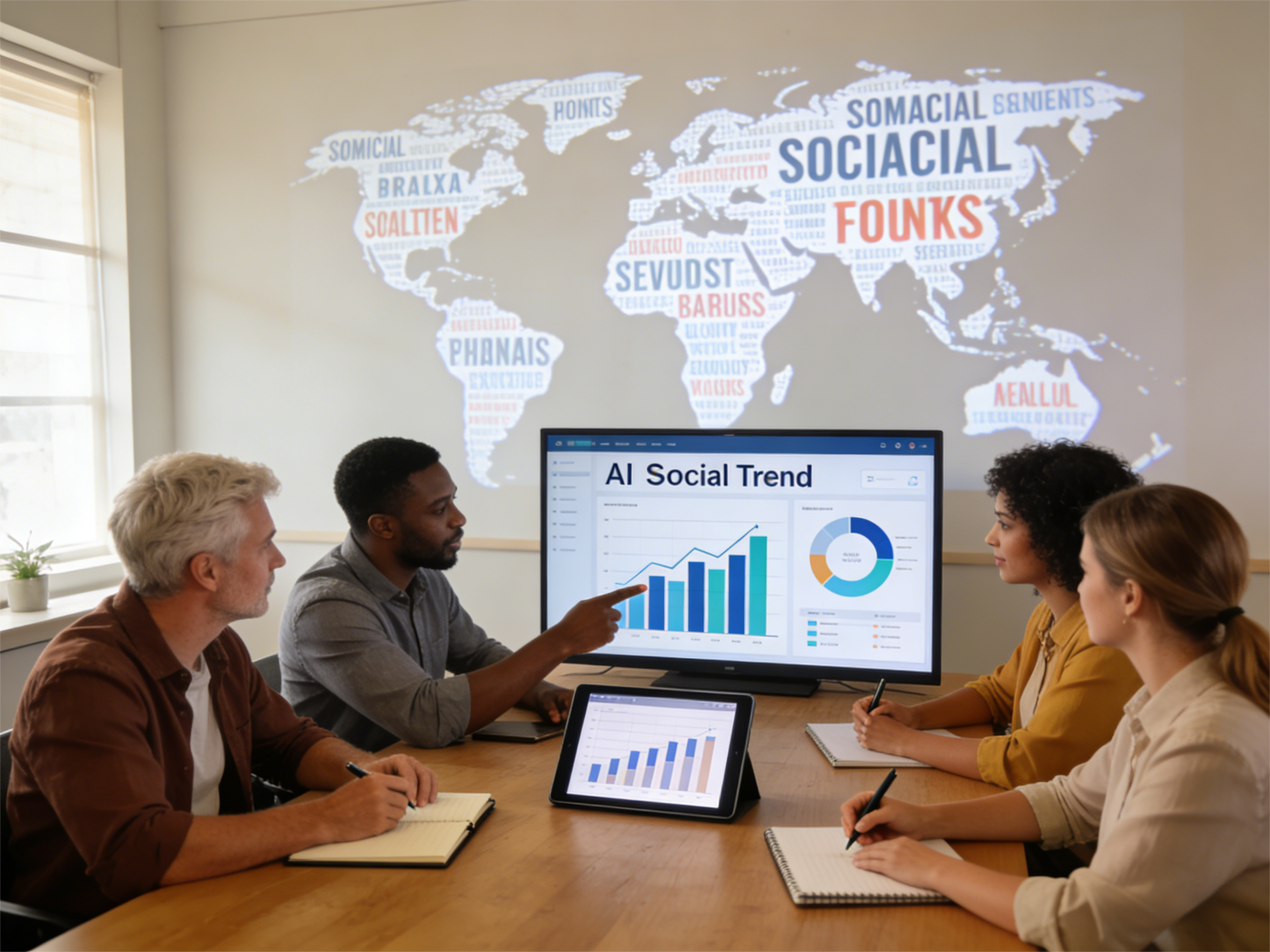
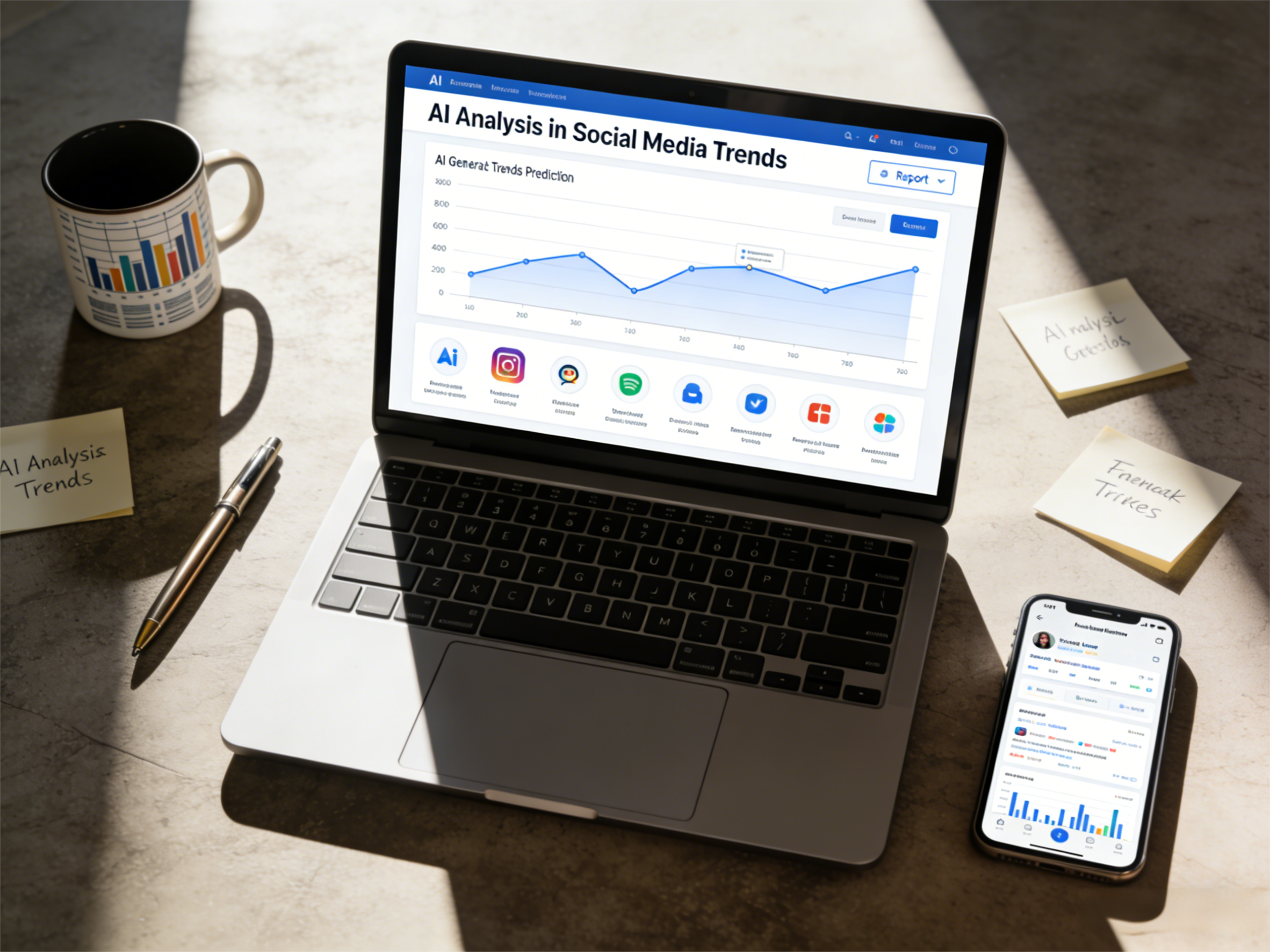
AI analysis helps you spot emerging social media trends by scanning millions of posts, comments, and hashtags for signals. You gain insights into audience behavior shifts with real-time analysis that detects patterns before they become mainstream. Mastercard used predictive analytics platforms to monitor social media conversations and identify microtrends early, resulting in timely ads and content. AI-powered creation tools enhance personalization and allow you to respond quickly to new signals. With trendspotting powered by AI, you can use real-time social listening and trend-driven content generation to stay ahead.
AI analysis enables brands and creators to leverage personalization and predictive analytics platforms.
AI-powered creation tools use signals from social media for effective trendspotting.
Key Takeaways
AI analysis scans millions of social media posts to identify trends before they go mainstream.
Using AI tools enhances personalization, allowing brands to create content that resonates with their audience.
Early trend detection gives businesses a competitive edge, enabling proactive marketing strategies.
Natural Language Processing (NLP) helps analyze social media chatter, revealing consumer sentiment and emerging trends.
Regularly updating data sources and training teams on AI insights improves trend forecasting accuracy.
AI Analysis in Social Media Trends
Data Collection Methods
You interact with social media every day, but have you ever wondered how AI gathers information to spot the next big trend? AI systems collect data from many sources to build a complete picture. These systems scan conversations in niche communities, forums, and comment threads. They also use social listening to track what people say across multiple platforms. This helps you find trends that might not be obvious at first.
AI uses several methods to collect data. Here is a table that shows the most common ways:
Method | Description |
|---|---|
Automated data collection tools | Tools that let you automatically crawl websites and extract data in a structured format. |
Primary data collection methods | Online surveys, focus groups, and interviews to gather data directly from people. |
Crowdsourcing | Platforms that collect large-scale human-generated datasets. |
AI does not just collect data. It also checks for quality and relevance. The process includes collecting both structured and unstructured data, training models, and fine-tuning predictions. AI filters out low-quality or misleading content, making sure you get accurate and up-to-date information. This step is important for predictive analytics, which helps you make smart decisions based on trends.
Pattern and Anomaly Detection
Once AI gathers data from social media, it looks for patterns and unusual changes. You benefit from this because AI can spot micro-trends before they go mainstream. AI uses different learning methods to find what stands out. Here is a table that explains how these methods work:
Learning Method | Description |
|---|---|
Supervised Learning | Trains on labeled datasets with examples of normal and unusual cases to predict new data points. |
Unsupervised Learning | Spots patterns and deviations in the dataset without needing labeled data. |
Semi-Supervised | Learns baseline patterns from normal data and flags big changes as anomalies. |
AI also uses ranking signals to recognize what matters most on social media. These signals include engagement rate, share rate, comment rate, and keywords. By tracking these signals, AI helps you understand what content is gaining attention and why. This process makes it easier for you to stay ahead of the curve and spot the next trend before everyone else.
Why Early Trend Detection Matters
Brand and Business Advantage
You gain a major edge when you spot a trend before your competitors. Early detection lets you use ai trend prediction to guide your marketing and sales strategies. When you use ai, you can justify bigger budgets, invest resources where they matter most, and catch problems before they grow. The table below shows how businesses benefit from early trend detection with ai:
Measurable Outcome | Description |
|---|---|
Budget Justification | Show a 40% budget increase by winning more deals and growing deal sizes. |
Proactive Investment | Find faster conversion rates and allocate resources ahead of time. |
Early Problem Detection | Spot dips in performance 6-8 weeks early for quick action. |
Improved Alignment | Connect marketing and sales data for better revenue growth. |
Competitive Advantage | Notice market shifts before others and improve your strategy. |
Demand Anticipation | Predict demand changes and match resources to your pipeline. |
You also learn what works by watching top posts from your competitors. Ai trend prediction helps you adapt quickly and use your resources wisely. Most marketers now use ai to make faster decisions, and many customers prefer brands that offer personalized experiences. The global ai marketing industry keeps growing as more companies see the value of this technology.
Opportunities for Creators
As a creator, you can use ai trend prediction to find new topics before they explode. Tools like Glimpse and Exploding Topics scan platforms such as Reddit, YouTube, and TikTok. These tools help you focus on trends that will last, not just short-lived fads. You can:
Discover high-value opportunities early.
Avoid wasting time on fleeting topics.
Build content around trends that will grow over the next year.
Ai gives you the power to predict what your audience will want next. This technology helps you stay ahead and build a loyal following.
Value for the Audience
Your audience benefits when you use ai trend prediction to shape your content. Ai tools like ChatGPT and Jasper create posts, captions, and videos that match what your viewers like. Ai analyzes user data to deliver content that feels personal and relevant. This approach leads to:
Higher engagement and stronger loyalty.
Better customer experiences with content tailored to each person.
More effective advertising and improved relationships.
When you use ai and technology to spot a trend, you give your audience what they want, when they want it. This keeps your brand fresh and your followers interested.
AI Trend Forecasting Process
Social Media Data Gathering
You start the trend forecasting process by collecting data from social media platforms. You use native analytics tools from Instagram, TikTok, and other networks to gather initial performance data. You also rely on third-party management tools to combine data from multiple sources into one dashboard. This step helps you avoid data silos and gives you a complete view of your audience’s journey. You track consumer preferences, product mentions, and engagement metrics. You include search volume, weather data, promotional activity, and supply chain data to enrich your forecasting. You make sure your data sources stay current and robust, which reduces the risk of outdated prediction.
Tip: Centralize your data to connect insights across platforms. This approach helps you understand how trends move between communities and channels.
Natural Language Processing (NLP)
You use NLP to process unstructured data from social media. NLP scans posts, comments, hashtags, and even emojis to detect emerging trends and shifts in sentiment. You gain insights into consumer behavior and market dynamics by analyzing social media chatter. NLP helps you spot signals that show investor confidence or concern, which can influence market movements. You use NLP to extract meaning from narrative data, making your trend forecasting more accurate. You train your team to interpret NLP-driven insights, which improves your prediction and content strategy.
NLP analyzes text, images, and videos for sentiment and context.
You use NLP to identify keywords and emotional triggers that drive trends.
Sentiment and Virality Analysis
You assess the sentiment and virality of social media content to improve your trend forecasting. You use AI to scan millions of posts in real-time, identifying tone, keywords, emojis, and even sarcasm. You analyze comments and posts where your brand is tagged to gauge overall sentiment. You track likes, shares, comments, and watch time to understand how content spreads. You use viral content prediction models to evaluate trending topics and emotional triggers. You study successful content formats and platform-specific algorithms to refine your prediction.
Metric | How You Use It for Trend Forecasting |
|---|---|
Engagement Rate | Measures likes, shares, and comments to spot viral trends |
Sentiment Score | Gauges public opinion and emotional response |
Virality Index | Tracks how quickly and widely content spreads |
Watch Time | Shows how long users engage with videos and live streams |
Keyword Frequency | Identifies rising topics and emerging trends |
Note: Real-time sentiment analysis helps you adjust your strategy quickly. You can launch targeted campaigns or modify your supply chain based on prediction.
Predicting Lasting vs. Fading Trends
You use AI and machine learning to forecast which trends will last and which will fade. You analyze structured and unstructured data to identify patterns and connections between past trends and emerging behaviors. You use predictive analytics to project which trends will gain traction. Neural networks help you detect complex relationships in data, allowing for non-linear forecasting and continuous learning. You monitor and adapt your strategy by establishing feedback loops for real-time adjustments. You set clear objectives for your trend forecasting, such as boosting engagement or refining your content strategy. You integrate AI tools with your existing systems to make prediction seamless.
Callout: Regularly update your data sources and train your team to interpret AI-driven insights. Continuous monitoring and adaptation improve your trend forecasting accuracy.
You use Google Trends to identify rising queries in your industry. You analyze them with AI for contextual insights. You leverage social media monitoring tools to provide real-time data for trend forecasting. You use predictive analytics to anticipate market demand and adjust your strategy. You rely on AI to provide insights that enable you to adapt in real time, whether you need to modify your supply chain or launch a new marketing campaign.
Steps for Effective AI Trend Forecasting
Set clear objectives for your trend forecasting efforts.
Integrate AI tools with your existing social media management systems.
Regularly update your data sources to ensure robust prediction.
Train your team to interpret AI-driven insights.
Monitor and adapt your strategy with real-time feedback loops.
Emoji: 🚀 You can stay ahead of the curve by using AI trend forecasting to spot emerging trends before they become mainstream.
AI Tools for Trend Analysis
Leading Platforms and Solutions
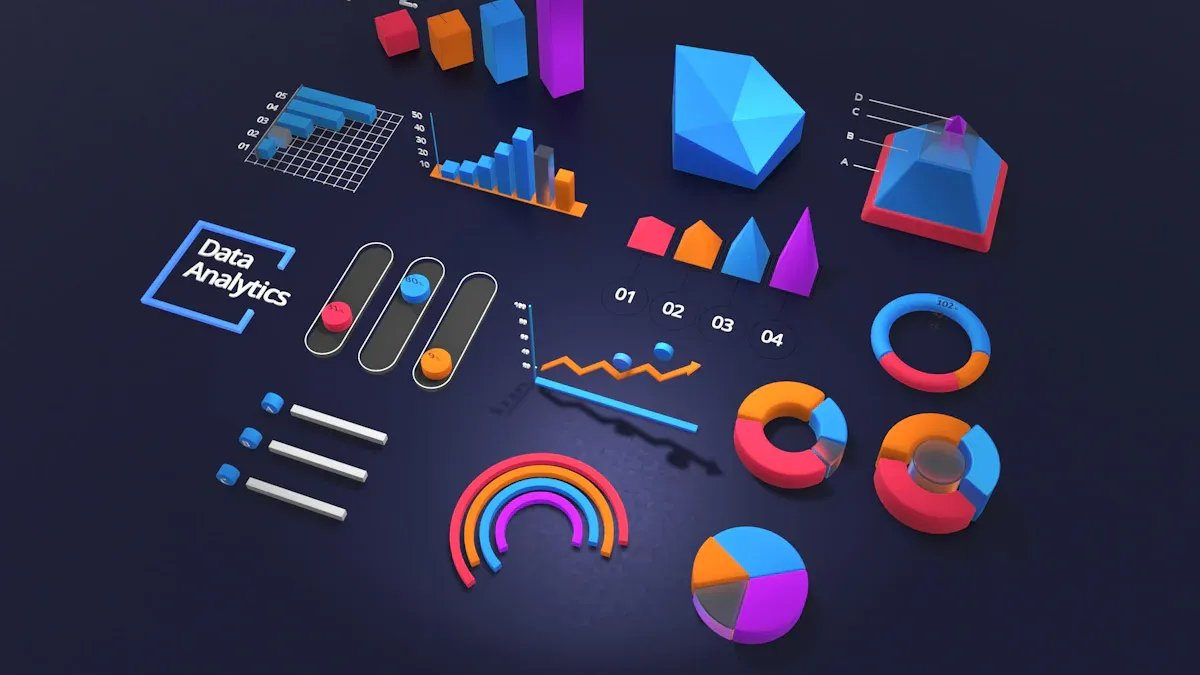
You can use advanced ai tools to transform how you approach trend analytics. Platforms like Trendalytics lead the way by combining multiple data sources. These tools analyze search data, runway images, and social media mentions to spot new directions in fashion and retail.
Trendalytics processes over 20 million images each week from Instagram and TikTok.
The platform uses computer vision to extract details about patterns, colors, and silhouettes from runway photos.
Natural language processing scans captions and comments for emerging topics and microtrends.
The system detects statistical anomalies and convergence across structured and unstructured datasets.
Social media analytics reveal how influencers and customers shape trends.
You benefit from these solutions because they help you track microtrends before they become mainstream. Ai models interpret data from Google Trends, e-commerce, and social media to forecast what will matter next. Analytics platforms also analyze retail foot traffic and visual data to give you a complete view of consumer behavior.
Tip: Use ai-powered analytics to connect insights from different channels. This approach helps you spot microtrends early and adjust your strategy quickly.
Case Studies in Fashion and Retail
You can see the impact of ai trend analytics in real-world examples. Mastercard uses an ai-driven marketing engine to analyze billions of social media conversations. This engine helps you pinpoint microtrends and engage with relevant topics before they explode.
Louis Vuitton recommends handbags based on your purchase history and social media activity. Depop and ASOS use ai to analyze TikTok trends, allowing you to create products that match Gen Z preferences. Trendalytics combines social media analytics and retail performance data, helping you identify consumer interests and plan marketing strategies.
A US-based home decor retailer faced high traffic but low conversion rates. By implementing a hybrid ai visual search solution, the retailer saw a 20% increase in conversions and a 35% reduction in bounce rate. H&M connects physical and digital shopping with visual search in their app. Amazon’s StyleSnap lets you upload photos and find similar items, making product discovery faster.
You can use these analytics tools to spot microtrends, improve customer experience, and inform your business strategy. Ai-driven analytics give you the power to stay ahead in a fast-changing market.
Impact of AI Insights on Audience
Shaping Marketing and Content
You see a big change in how brands connect with their audience because of ai. Marketers now use ai to track audience engagement in real time. This helps you adjust your campaigns and messages quickly. You can spot what your audience likes and respond before trends fade.
Ai gives you instant insights into customer behavior during the sales process. You can change your strategy as soon as you see new data.
Ai tools help you create blog posts, social media updates, and ads that match your brand’s voice. You can also make images and videos that speak to different parts of your audience.
Ai lets you generate and curate content based on what your audience prefers. This keeps your communication fresh and targeted.
You notice higher audience engagement when your content matches what people want. Ai helps you keep a steady flow of high-quality material. Your audience feels heard and valued, which builds trust and loyalty.
Tip: Use ai to monitor audience engagement and adjust your content strategy. This keeps your brand relevant and your audience interested.
Empowering Consumer Choices
Ai does more than help brands. It gives your audience the power to make better choices. When you use ai, you boost the authenticity of your data. Your audience can trust the information they see. Real-time analysis helps you spot trends before they become mainstream. This means your audience stays ahead of market changes.
Ai-driven sentiment analysis uncovers hidden emotions in your audience. You can personalize your interactions and give your audience what they need. This leads to smarter decisions and stronger engagement.
Benefit for Audience | How AI Delivers Value |
|---|---|
Data Authenticity | Ensures your audience gets reliable info |
Early Trend Access | Helps your audience stay ahead of the curve |
Personalized Experience | Matches content to your audience’s emotions |
You use ai to create a better experience for your audience. They feel empowered, informed, and ready to engage with your brand.
Challenges in AI Trend Forecasting
Data Privacy and Ethics
You face important challenges when you use ai to spot social media trends. Data privacy stands out as a top concern. Regulations now require you to follow strict data collection practices. You must get clear user consent before using personal information. These rules shape how you design your strategies and train your ai models. The table below shows how privacy laws affect your work:
Evidence Type | Description |
|---|---|
Data Collection Practices | Regulations enforce stricter data collection practices, impacting how ai is trained. |
User Consent | Enhanced user consent requirements influence data usage in ai models. |
Transparency | Regulations foster transparency, affecting public trust and engagement with ai-driven platforms. |
You need to build trust with your audience. Young users demand more transparency and ethical data handling. When you focus on privacy in your strategies, you gain loyalty and keep your audience engaged. Companies that respect privacy often see better results from their strategies.
Note: Always review your strategies to ensure you follow privacy laws and ethical guidelines.
AI Limitations and Human Oversight
You also face technical challenges when you use ai for trend forecasting. High-quality data is hard to find. Inconsistent or biased data can lead to mistakes in your strategies. Many ai models act like black boxes, making it tough for you to understand their decisions. This lack of clarity can hurt trust in your strategies.
Here are some common challenges you may encounter:
Data delays can slow down your strategies, making it hard to react quickly.
Algorithmic bias can affect your strategies if your data is not diverse.
Speed and accuracy often compete. Fast strategies may miss important details, while slow strategies may lose relevance.
Cost and resource needs can limit your strategies, especially for small teams.
You can improve your strategies by adding human oversight. Experts can check ai recommendations and adjust your strategies as needed. This approach helps you avoid errors and keeps your strategies reliable. Companies like IBM Watson Health and JPMorgan Chase use human-in-the-loop models to verify ai outputs. You should always combine ai with expert review to get the best results from your strategies.
Tip: Regularly update your strategies and train your team to spot errors or bias in ai outputs.
You see how ai changes social media trend forecasting. Traditional methods move slowly and cost more. Now, ai processes unstructured data and finds hidden trends. You get results 100 times faster and improve decision-making accuracy by 20%. Brands like Zara use ai to predict trends and create new content quickly. You can use ai to analyze content patterns, recommend posting times, and suggest content topics. Generative ai helps you make engaging content and personalize ads. You should explore ai-driven insights to improve your content strategy and stay ahead.
Tip: Let ai guide your content planning for better engagement and growth.
FAQ
How does AI spot trends on social media?
You use ai to scan millions of posts, comments, and hashtags. The technology finds patterns and detects changes in audience behavior. This helps you see trends before they become popular.
Can AI predict which trends will last?
You rely on ai to analyze past data and current signals. The system uses machine learning to forecast if a trend will grow or fade. This helps you focus on lasting opportunities.
What types of data does AI analyze for trends?
You see ai process text, images, videos, and even emojis. The technology gathers information from platforms like Instagram, TikTok, and Twitter. This gives you a complete view of what is trending.
Is AI trend analysis useful for small businesses?
You benefit from ai trend analysis even with a small team. The tools help you spot market shifts, create relevant content, and compete with larger brands. You can make smarter decisions quickly.
How do you keep AI trend analysis ethical?
You follow privacy laws and get user consent before collecting data. You review ai outputs for bias and errors. Human oversight ensures that your trend analysis stays fair and trustworthy.